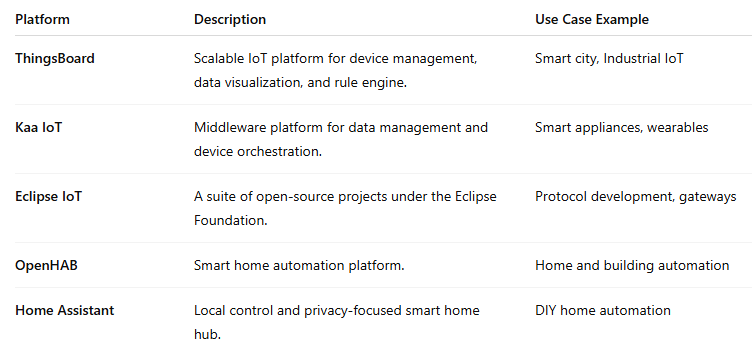
The Internet of Things (IoT) is revolutionizing how industries operate by enabling real-time data exchange, automation, and smarter decision-making. From smart homes and healthcare systems to manufacturing and agriculture, IoT technologies are playing a critical role in digital transformation. Among the various tools that power IoT solutions, open-source platforms have gained widespread popularity due to their flexibility, cost-effectiveness, and community support. These platforms allow developers to build scalable and customizable IoT systems without being tied to a single vendor. However, like any technology, they come with their own set of limitations. This article explores the key benefits and drawbacks of using open-source IoT platforms, helping you decide whether they are the right fit for your next project.

- Home
- Certification Courses
- Freshers
- PGD in Embedded Systems Course with Artificial intelligence
- Professional Diploma in Embedded Systems Course with Placement
- PG Diploma in Embedded Systems Design & Development
- PG Diploma in Internet of Things (IoT)
- Full Stack Java With Placements
- Professional Diploma in Software Programming
- PG Diploma in Data Science – Coming Soon
- Working Professional
- Freshers
- Crash Courses
- College Training
- College Workshop
- Internship Program
- AICTE-Approved Internships in Bangalore
- VTU Approved Institute For Internship in Bangalore
- VTU Approved Internship on Embedded Systems with Placement
- VTU-Approved IoT Internship Bangalore
- VTU Approved ARM Cortex Embedded Internship in Bangalore
- VTU Approved AI & Machine Learning Internship in Bangalore
- VTU Approved STM32 Cortex Embedded Internship in Bangalore
- VTU Approved MATLAB & Simulink Embedded Internship in Bangalore
- VTU Approved Embedded with AI Internship in Bangalore
- VTU Approved PCB Design Internship in Bangalore
- VTU Approved Internship On Communication Protocols in Embedded Systems
- Faculty Development Program (FDP)
- Placement Prepardness Program (PPP)
- Summer Training Programs (STP)
- Academic Projects
- R&D Lab Setup
- Corporate Training
- Placements
- Admission Process
- Contact
- Enrollment