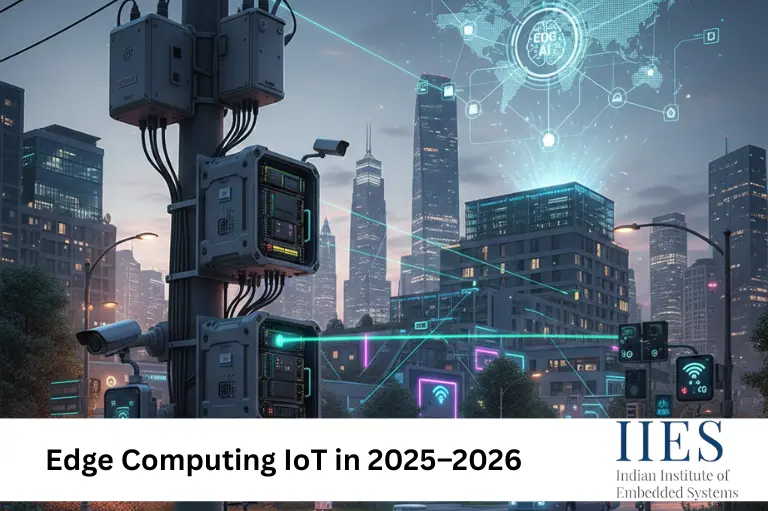
Why Edge Computing IoT Is Needed
Millions of sensors generate data every second. If all this data is pushed to the cloud, networks become slow and costly. Edge computing IoT filters data at the device level and sends only useful information.
In large factories, thousands of signals are generated per second, and without edge computing IoT, cloud systems quickly become overloaded.
In practical systems, engineers have observed that edge computing IoT improves response time by several seconds, which can prevent accidents and equipment damage.
Benefits of Edge Computing
Some clear benefits of edge computing seen in real projects are:
- Faster response in safety systems using edge computing IoT
- Reduced internet data usage due to local filtering
- Better system stability even during network failure
- Improved security because edge computing IoT keeps data local
With edge computing IoT, systems can continue to operate even when connectivity is unstable.
Edge Computing Architecture
A typical edge computing architecture includes sensors, microcontrollers, rule engines, and a local database in edge computing for short-term storage.
This structure allows edge computing IoT to work smoothly in remote and industrial environments. Without this design, edge computing IoT projects fail when the network becomes unstable.
Edge vs Fog vs Cloud
| Feature | Edge Computing IoT | Fog Computing | Cloud Only |
|---|
| Processing location | On device | Between device & cloud | Central server |
| Internet dependency | Very low | Medium | High |
| Latency | Very low | Low | High |
| Real-time safety | Best | Good | Poor |

Real Time Edge Processing
In systems like autonomous vehicles and industrial robots, real time edge processing is critical.
Without edge computing IoT, machines must wait for cloud responses, which can be unsafe. This is why industries are shifting from cloud-only logic to edge computing IoT.
Embedded Edge Computing in Devices
Embedded edge computing runs on microcontrollers and Linux boards. Using edge computing for embedded systems, engineers build solutions where edge computing IoT handles logic locally.
Many learners realize the importance of this approach while experimenting with hardware during technical sessions at training institutes.
Data Processing at the Edge
Data processing at the edge removes noise and unnecessary data before uploading. This saves cloud cost and improves decision accuracy in edge computing IoT systems.
For example, instead of uploading thousands of temperature values, edge computing IoT sends only alerts.
IoT Security Architecture & Device Authentication
A strong IoT security architecture must include device authentication in IoT. Since edge computing IoT keeps data local, it naturally reduces exposure to cyber threats.
This makes edge computing IoT more reliable for healthcare and factory automation.
Edge Analytics Architecture
With edge analytics architecture, sensor data is analyzed immediately at the device level.
This helps in predictive maintenance and fault detection using edge computing IoT. Systems can detect faults before breakdown occurs.
Industrial IoT Architecture
In industrial IoT architecture, machines produce huge data streams. Edge computing IoT prevents overload by processing data close to the source.
Without edge computing IoT, production systems face frequent delays.
Common IoT Architecture Mistakes
Some common IoT architecture mistakes are:
- Sending all raw data to the cloud
- Ignoring security implementation
- Not planning for offline operation
These mistakes occur when designers do not understand the real value of edge computing IoT.

Edge Computing Challenges & Pitfalls
| Issue | Example |
|---|
| Hardware limits | Low memory on controllers |
| Security threats | Unprotected edge devices |
| Maintenance | Firmware update failures |
These are common edge computing challenges and edge computing pitfalls engineers face while deploying edge computing IoT solutions.
Embedded Cloud Connectivity
Using embedded cloud connectivity, only alerts and summaries from edge computing IoT systems are uploaded, reducing cost and bandwidth.
This makes edge computing IoT affordable even for small companies.
Real-Time Edge Computing Project Ideas
Smart Water Pump Protection
The device checks water level locally and stops the motor automatically if dry-run is detected using edge computing IoT.
Cold Storage Temperature Monitor
The system triggers an alarm instantly if temperature crosses limit without waiting for cloud confirmation, all because of edge computing IoT.
Fleet Health Monitoring
Brake and battery sensors are processed locally so drivers receive alerts in real time using edge computing IoT.
Day-to-Day Problems Solved
| Daily Challenge | How Edge Helps |
|---|
| Internet outage | System still works using edge computing IoT |
| High data usage | Only alerts uploaded |
| Slow reactions | Instant device-level action |
Final Thoughts
Modern IoT is no longer about sending everything to the cloud. It is about building devices that can think and react locally.
With edge computing IoT, systems become smarter, safer, and more dependable. Engineers who start understanding this early—through practice, experimentation, or exposure in learning environments such as IIES – Indian Institute of Embedded Systems—find it easier to design reliable real-world IoT solutions using edge computing IoT.