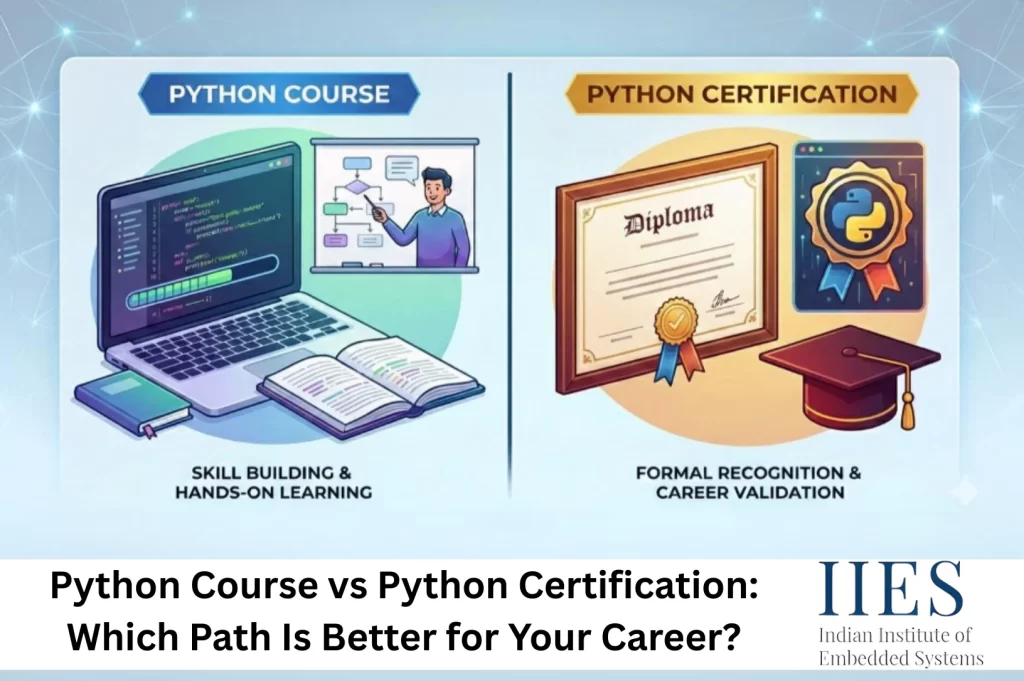
Understanding Python Courses
A Python course focuses on structured learning and practical implementation. Instead of learning random concepts from scattered resources, you follow a clear roadmap that gradually builds your knowledge. You start with fundamentals such as variables, loops, and functions, then move toward advanced topics like object-oriented programming, automation scripts, and real-world applications.
This step-by-step progression is especially important for beginners. Without guidance, many learners know syntax but struggle to apply Python to solve real problems. Professional Python training for beginners bridges this gap by combining theory with hands-on practice.
During a course, you typically work on tasks such as:
- writing automation scripts
- handling files and data
- building small applications
- solving coding challenges
- creating portfolio projects
These activities develop practical confidence, which is exactly what companies look for during interviews.

Example exercises from real training
# automate file processing

import os

for file in os.listdir("reports"):

    if file.endswith(".csv"):

        print("Processing:", file)

# analyze simple dataset

import pandas as pd

data = pd.read_csv("students.csv")

print("Average score:", data["marks"].mean())

# basic class structure

class Student:

    def __init__(self, name):

        self.name = name

    def greet(self):

        return f"Hello {self.name}"
These examples show how learning connects directly to real applications rather than just textbook knowledge.
Institutes like Indian Institute of Embedded Systems Bangalore go a step further by integrating Python with embedded systems, IoT, and automation projects. This practical exposure helps students understand how Python is used in real engineering environments, which significantly improves employability.
Python Course Benefits for Beginners
When starting your programming journey, having structure and mentorship makes a huge difference. Self-learning often leads to confusion, while guided training ensures consistent progress.
Major python course benefits
- Clear and organized syllabus
- Continuous coding practice
- Real-world projects
- Mentor support
- Faster skill development
- Portfolio creation
- Placement assistance
For freshers and career switchers, choosing a Python course for beginners with placement provides both technical skills and job opportunities, making the transition into the IT industry smoother.
Understanding Python Certification
While courses focus on learning, certifications focus on validation.
A Python certification exam tests whether you already understand programming concepts and can apply them correctly under time constraints. It acts as proof that your skills meet industry standards.
Well-recognized certifications are offered by organizations such as:
- Microsoft
- Cisco
- Python Institute
These credentials can strengthen your resume and help you stand out during recruitment.
Benefits of Python Certification
Certification becomes valuable once you already have practical experience. It gives formal recognition to your skills and improves professional credibility.
It can help you:
- demonstrate verified knowledge
- get shortlisted faster in interviews
- improve salary prospects
- qualify for advanced roles
- build trust with employers
However, certifications are not substitutes for hands-on skills. Without real coding practice, exams can feel difficult.
Example of a typical exam-style question:
x = [1, 2, 3]

print(x[::-1])

Output:

[3, 2, 1]
Questions often test logic and clarity rather than step-by-step learning.

Python Course vs Python Certification – Comparison
Factor | Python Course | Python Certification |
Purpose | Learn and practice | Validate knowledge |
Ideal for | Beginners | Experienced learners |
Approach | Projects & mentorship | Exam-based |
Result | Practical skills | Recognized credential |
Career value | Job readiness | Resume strength |
Which is Better: Python Course or Certification?
If you’re wondering which is better Python course or certification, the answer depends on your current stage.
If you’re new, start with learning. Jumping directly to certification without experience usually leads to frustration. A course builds the foundation first.
If you already know Python and want to showcase your skills professionally, certification adds credibility.
For many learners searching for the best Python course in Bangalore, selecting a training program that offers real projects and placement support is often the most practical first step.
Recommended Career Path
Instead of choosing only one, a combined approach works best.
A smart learning roadmap:
- Start with structured training
- Build real-world projects
- Practice regularly
- Gain internship or job experience
- Then attempt certification
This gives you both competence and recognition, which significantly improves your career prospects.
Final Thoughts
The debate around python course vs python certification should not be about popularity but about purpose. Courses help you learn. Certifications help you prove.
If you are beginning your journey, invest in strong fundamentals through professional training. Once confident, validate your expertise with certification. This balanced approach ensures long-term success.
Focus on skills first — credentials next — and your career growth will follow naturally.