Author: IIES Bangalore

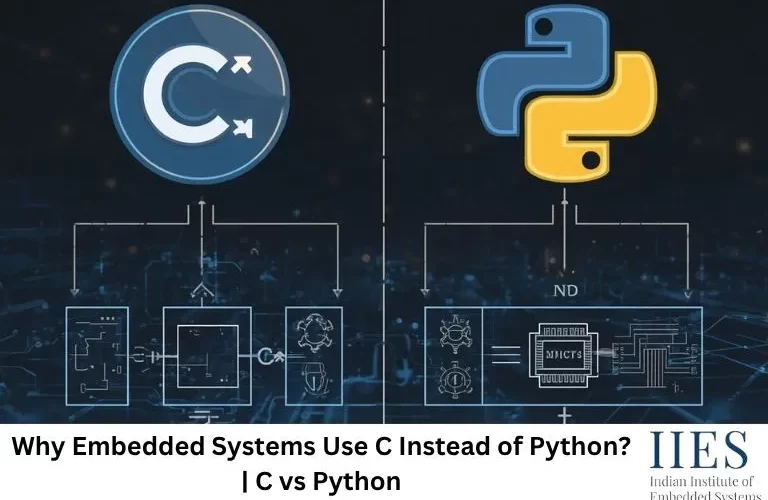
Why Embedded Systems Use C Instead of Python? | C vs Python Embedded systems commonly use C instead of Python because C provides efficient execution, low memory usage, and direct hardware access.C is well suited for microcontroller programming, firmware development, and real-time embedded systems with …
Read more
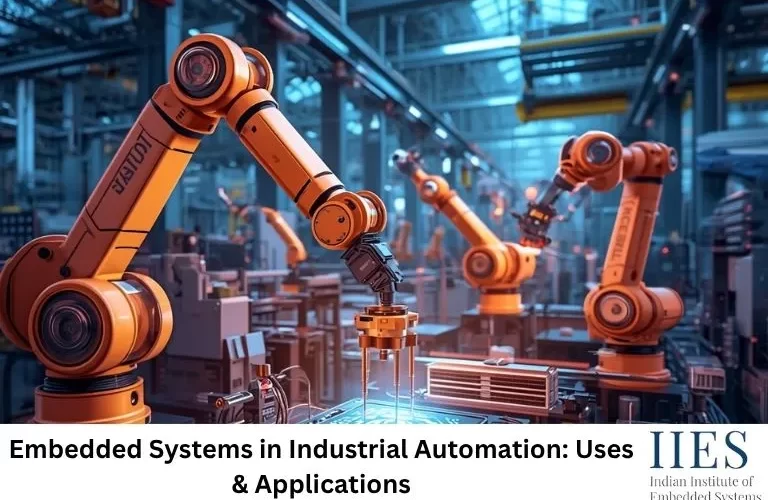
How Embedded Systems Are Used in Industrial Automation Embedded systems play a critical role in industrial automation by connecting sensors, controllers, machines, and communication networks. They enable real-time monitoring, motor control, robotics, machine safety, and industrial IoT (IIoT). By combining embedded systems with technologies such …
Read more
Polling vs Interrupts in Microcontrollers: Which to Use? Polling and interrupts are two common ways microcontrollers detect and respond to events.Polling continuously checks a hardware condition, while interrupts notify the CPU when an event occurs.Choose polling for simple, predictable tasks and interrupts for asynchronous events …
Read more
Embedded C Skills That Can Improve Your Job Opportunities Embedded C skills can improve job opportunities by helping students build strong foundations in firmware and microcontroller programming. Key skills include pointers, memory management, bit manipulation, interrupts, communication protocols, debugging, and RTOS basics.Practical projects that combine …
Read more
What Is Quantization in Edge AI? | INT8 & AI Models Quantization in Edge AI reduces the precision of AI model values to make them smaller and faster for edge devices.INT8 quantization can lower memory usage and improve inference efficiency while maintaining useful model accuracy.Learn …
Read more
AI vs Traditional Algorithms in Embedded Systems: Which Approach Is Better? AI enables embedded systems to recognize patterns, classify data, and make predictions, while traditional algorithms rely on predefined rules and mathematical logic. Traditional methods are ideal for predictable real-time tasks, whereas AI is useful …
Read more
Stack Overflow in Embedded Systems: Causes & Prevention Stack overflow in embedded systems occurs when a program uses more stack memory than the allocated stack space can hold. It commonly results from deep recursion, large local variables, excessive function calls, interrupts, or incorrectly sized RTOS …
Read more
Is C Programming Enough for an Embedded Systems Job? If you are preparing for an embedded systems job as a fresher, there is a good chance you have heard the same advice again and again: “Learn C. Embedded systems companies mainly use C.” That advice …
Read more
Stack vs Heap in C: Key Differences for Embedded Systems Imagine you are writing an Embedded C program for a microcontroller. Your code needs memory for variables, function calls, arrays, and temporary data. But where does all this data actually go? This is where stack …
Read more
7 Reasons Freshers Get Rejected in Placement Interviews Notes from the interview room Why Freshers Get Rejected in Interviews It’s rarely one big mistake. It’s usually a handful of small ones — and most of them happen before you even sit down. Structured, practical prep …
Read more