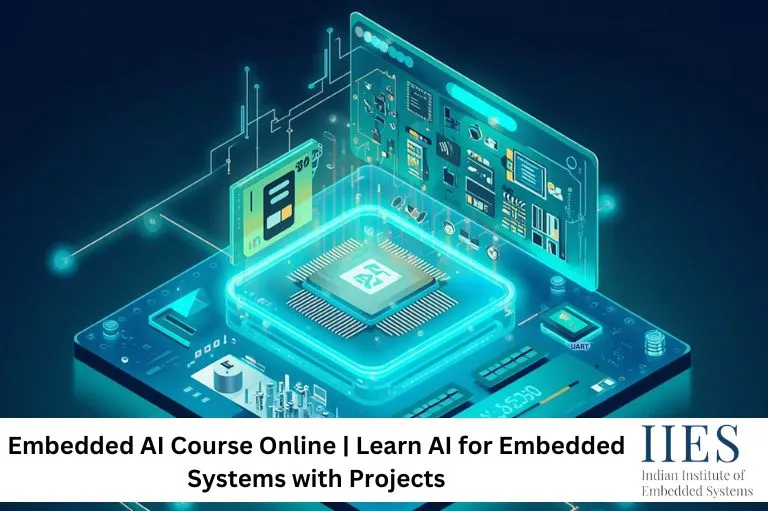
What Is Embedded AI?
Embedded AI refers to the integration of artificial intelligence algorithms directly into embedded systems. Instead of sending data to a remote server for processing, AI models run locally on devices with limited memory, processing power, and energy consumption.
Examples of Embedded AI include:
- Smart surveillance cameras with object detection
- Voice-controlled IoT devices
- Predictive maintenance systems in factories
- Autonomous robots
- Smart home automation systems
- Driver assistance systems in vehicles
- Medical monitoring devices
Embedded AI combines the strengths of embedded systems and machine learning to create intelligent devices capable of real-time decision-making.

Why Is Embedded AI Becoming So Important?
Modern industries are moving toward edge computing because it offers several advantages over cloud-only AI solutions.
Faster Response Time
Processing data locally eliminates network latency. Devices can make decisions instantly, which is critical for applications such as autonomous vehicles, robotics, and industrial automation.
Improved Privacy
Sensitive information remains on the device instead of being transmitted to cloud servers, improving security and privacy.
Reduced Bandwidth Usage
Embedded AI minimizes the need to continuously send large amounts of data to the cloud, reducing communication costs.
Reliable Operation
Devices can continue functioning even without an internet connection, making them suitable for remote and mission-critical applications.
Energy Efficiency
Modern TinyML and Edge AI techniques allow machine learning models to operate efficiently on low-power hardware.
As industries continue adopting intelligent systems, the demand for engineers skilled in Embedded AI is increasing rapidly.
What Will You Learn in an Embedded AI Course Online?
A well-structured Online Embedded AI Training program covers both foundational and advanced concepts.
1. Embedded Systems Fundamentals
Students learn:
- Microcontrollers and processors
- Embedded C programming
- GPIO, UART, SPI, and I2C communication
- Real-Time Operating Systems (RTOS)
- Sensor interfacing
Understanding embedded hardware is essential before implementing AI applications.
2. Introduction to Artificial Intelligence
Core AI concepts include:
- Artificial Intelligence
- Machine Learning
- Deep Learning
- Neural Networks
- Data Processing
Students gain a clear understanding of how intelligent systems learn from data.
3. Machine Learning Fundamentals
Topics generally include:
- Classification algorithms
- Regression models
- Decision trees
- Feature engineering
- Model evaluation techniques
These concepts form the foundation of Embedded AI applications.
4. TinyML and Edge AI
TinyML has become one of the most important technologies in modern embedded development.
Students learn:
- TensorFlow Lite Micro
- TinyML workflows
- Model optimization
- Quantization techniques
- Edge AI deployment
This enables AI models to run efficiently on resource-constrained devices.
5. AI Model Deployment on Embedded Hardware
Practical training typically includes deployment on:
- Arduino boards
- ESP32
- STM32
- Raspberry Pi
- Edge AI development kits
Students learn how to move from simulation to real hardware implementation.
Essential Skills Developed Through an Embedded AI Certification Course
Employers increasingly seek professionals who possess interdisciplinary expertise.
An Embedded AI Certification Course helps learners develop:
Technical Skills
- Embedded C Programming
- Python Programming
- Machine Learning
- Deep Learning
- TinyML Development
- Sensor Integration
- RTOS Concepts
- Edge AI Deployment
Problem-Solving Skills
Students learn to:
- Optimize AI models
- Reduce memory usage
- Improve inference speed
- Design intelligent embedded applications
- Troubleshoot hardware-software integration challenges
These practical skills are highly valued across industries.
Real-World Embedded AI Projects
Hands-on projects are one of the most important components of an effective Embedded AI Course Online.
Popular projects include:
Smart Object Detection System
Build a camera-based system capable of identifying objects in real time.
Voice Recognition Device
Create a device that responds to voice commands without internet connectivity.
Predictive Maintenance System
Use sensor data and machine learning algorithms to predict equipment failures.
Smart Agriculture Monitoring
Develop an intelligent system that analyzes soil and environmental conditions.
Gesture Recognition System
Build an AI-powered interface capable of recognizing hand gestures.
Projects help learners understand real-world implementation challenges while strengthening their portfolios.
Applications of Embedded AI Across Industries
Embedded AI is transforming nearly every industry.
Automotive Industry
Applications include:
- Driver monitoring systems
- Lane detection
- Collision avoidance
- Autonomous driving assistance
Industrial Automation
Manufacturers use Embedded AI for:
- Predictive maintenance
- Quality inspection
- Process optimization
- Equipment monitoring
Healthcare
Medical applications include:
- Wearable health devices
- Smart diagnostic equipment
- Patient monitoring systems
Consumer Electronics
Examples include:
- Smart speakers
- Security cameras
- Home automation devices
- Personal assistants
Agriculture
AI-powered embedded systems support:
- Crop monitoring
- Irrigation management
- Disease detection
- Precision farming
These applications demonstrate why Embedded AI is one of the fastest-growing technology domains.
Career Opportunities After Learning Embedded AI
The combination of AI and embedded systems creates excellent career prospects.
Popular job roles include:
- Embedded AI Engineer
- Edge AI Developer
- TinyML Engineer
- Embedded Software Engineer
- IoT AI Developer
- Machine Learning Engineer
- Robotics Engineer
- Computer Vision Engineer
- AI Research Associate
- Industrial Automation Engineer
Organizations across automotive, healthcare, robotics, aerospace, manufacturing, and consumer electronics sectors actively seek professionals with Embedded AI expertise.

Who Should Enroll in an Embedded AI Course Online?
This course is ideal for:
Engineering Students
Students from:
- Electronics and Communication Engineering
- Electrical Engineering
- Computer Science Engineering
- Mechatronics Engineering
Working Professionals
Professionals looking to upgrade their skills in:
Technology Enthusiasts
Anyone interested in building intelligent hardware products can benefit from learning Embedded AI.
No matter your background, a structured learning path can help you transition into this high-growth field.
Why Online Embedded AI Training Is the Future of Learning
Online training provides several advantages:
- Learn from anywhere
- Flexible schedules
- Access to recorded sessions
- Industry-focused curriculum
- Practical project experience
- Cost-effective learning
- Career guidance and mentorship
Students can learn at their own pace while gaining valuable hands-on experience.
How to Choose the Best Embedded AI Course Online
Before enrolling, evaluate the course based on:
Industry-Relevant Curriculum
Ensure the course covers:
- Embedded Systems
- Machine Learning
- TinyML
- Edge AI
- Real-world deployment
Hands-On Projects
Practical implementation is essential for mastering Embedded AI.
Expert Trainers
Learn from instructors with industry experience.
Placement Assistance
Career support can significantly improve job opportunities.
Certification
A recognized certification demonstrates your expertise to employers.
Choosing the right course can accelerate your learning journey and improve employability.
The Future of Embedded AI
The future of intelligent devices depends heavily on Embedded AI.
As hardware becomes more powerful and AI models become more efficient, we will see increasing adoption in:
- Smart Cities
- Autonomous Vehicles
- Healthcare Devices
- Industrial IoT
- Consumer Electronics
- Robotics
- Agriculture Technology
Engineers who develop expertise in Embedded AI today will be well-positioned for future technology trends.
Conclusion
An Embedded AI Course Online is one of the most valuable investments for students and professionals interested in next-generation technology. By combining embedded systems knowledge with artificial intelligence, learners gain the ability to develop intelligent devices capable of real-time decision-making at the edge.
From TinyML and Edge AI to machine learning deployment on microcontrollers, the opportunities in this field continue to expand. With practical projects, industry-focused training, and hands-on experience, learners can build the skills required to succeed in one of the most exciting areas of modern engineering.
If you want to future-proof your career and become part of the next wave of innovation, now is the perfect time to start learning Embedded AI.