What is the Mali G52 GPU?
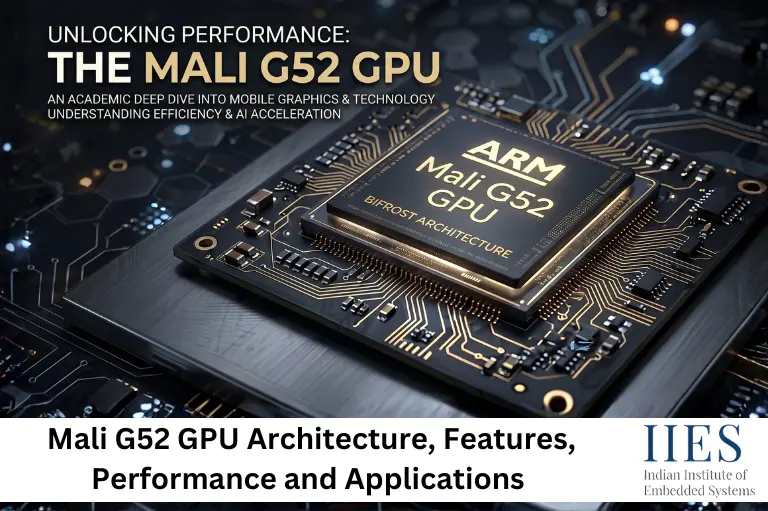
The Mali G52 GPU is a mid-range graphics processor developed by ARM for smartphones, tablets, smart TVs, automotive systems, and embedded devices.
Definition: The Mali G52 GPU is a Bifrost-based graphics processing unit optimized for graphics rendering, parallel computing, multimedia acceleration, and machine learning inference.
Introduced as the successor to the Mali-G51, the G52 delivers improved computational efficiency, better energy management, and enhanced graphics capabilities. ARM specifically designed the GPU to provide a strong balance between performance and battery life, making it suitable for devices where thermal constraints and power consumption are important considerations.
The GPU is commonly integrated into MediaTek and other ARM-based SoCs used across consumer electronics and industrial embedded products.

How Does the Mali G52 GPU Architecture Work?
The Mali G52 is built using ARM’s Bifrost architecture, which focuses on maximizing throughput while minimizing energy consumption.
Bifrost Architecture Definition: Bifrost is ARM’s GPU architecture designed to improve parallel processing efficiency, graphics rendering performance, and machine learning computation.
Key architectural features include:
- Multiple Execution Engines (EEs)
- Optimized arithmetic pipelines
- Thread-level parallelism
- Advanced workload scheduling
- Enhanced cache management
- Energy-aware execution models
Unlike older GPU architectures that relied heavily on fixed-function hardware, Bifrost introduces a more flexible execution model capable of handling graphics and compute workloads efficiently.
Execution Engines and Parallel Processing
Each Mali G52 core contains multiple execution engines capable of processing several threads simultaneously.
This design enables:
- Faster shader execution
- Improved graphics rendering
- Better compute performance
- Higher AI inference throughput
For graphics-intensive applications such as gaming and AR rendering, parallel execution significantly reduces rendering bottlenecks.
Mali G52 GPU Specifications
Understanding the Mali G52 GPU specifications provides a quick overview of its architecture, graphics capabilities, AI support, and multimedia features. The GPU was designed to deliver a balance between performance and power efficiency for mobile and embedded applications.
Specification | Details |
Architecture | ARM Bifrost |
GPU Type | Mid-range Mobile GPU |
Vulkan Support | Yes |
OpenGL ES Support | Yes |
OpenCL Support | Yes |
Maximum Cores | Up to Multi-Core Configurations |
AI Support | INT8 and FP16 Acceleration |
Multimedia Support | 4K Video Playback |
Power Management | Dynamic Voltage and Frequency Scaling (DVFS) |
Primary Applications | Smartphones, Smart TVs, Embedded Systems |
These specifications make the Mali G52 a versatile GPU capable of supporting gaming, multimedia processing, machine learning inference, and graphics-intensive embedded applications while maintaining excellent energy efficiency.
Key Features of the Mali G52 GPU
The Mali G52 offers several capabilities that make it attractive for modern embedded and mobile applications.
Graphics API Support
The GPU supports:
This broad API compatibility enables developers to create advanced graphics applications while maintaining cross-platform support.
4K Multimedia Processing
The GPU can efficiently support:
- 4K video playback
- HDR rendering
- Advanced image processing
- Computational photography
This capability makes it suitable for multimedia-centric devices such as smart TVs and streaming platforms.
Machine Learning Acceleration
The Mali G52 includes hardware optimizations for:
- INT8 operations
- FP16 computations
- Neural network inference
Developers can utilize ARM Compute Library optimizations to accelerate AI workloads directly on the GPU.
Mali G52 GPU Benchmark Performance
The real-world performance of the Mali G52 GPU depends on several factors, including clock frequency, memory bandwidth, thermal design, and the specific System-on-Chip (SoC) implementation. As a result, benchmark results can vary across devices that use the same GPU.
Typical benchmark performance falls within the mid-range mobile GPU category, making the Mali G52 suitable for gaming, multimedia processing, and embedded graphics applications.
Benchmark | Typical Performance |
Geekbench GPU Compute | Approximately 1,200–1,800 |
GFXBench Manhattan | Mid-Range Performance Category |
3DMark Wildlife | Entry to Mid-Range Graphics Performance |
Vulkan Graphics Workloads | Smooth Performance in Optimized Applications |
OpenGL ES Rendering | Suitable for Most Mobile Games |
In practical usage, the Mali G52 delivers smooth performance for casual gaming, user interface rendering, video playback, and graphics-intensive embedded applications. While it is not designed to compete with flagship mobile GPUs, it provides an effective balance between graphics capability and power efficiency.

Is Mali G52 Good for Gaming?
One of the most common questions among smartphone users is whether the Mali G52 provides a good gaming experience.
The answer depends on workload complexity, device thermal design, and SoC implementation.
For mid-range gaming applications, the Mali G52 performs well in:
- Mobile esports games
- Casual 3D games
- MOBA titles
- Strategy games
- Racing simulators
The GPU’s support for Vulkan allows game developers to achieve lower CPU overhead and improved graphics efficiency.
Many beginners assume GPU performance depends solely on the GPU model. In practice, memory bandwidth, thermal management, CPU performance, and software optimization significantly influence gaming results.
How Does Mali G52 Support AI and Machine Learning?
The Mali G52 GPU includes hardware optimizations that help accelerate AI and machine learning workloads on mobile and embedded devices. It can efficiently support applications such as:
- Object detection
- Facial recognition
- Image enhancement
- Voice processing
- Neural network inference
By leveraging the ARM Compute Library, developers can offload AI tasks to the GPU, improving processing efficiency and reducing CPU workload. This enables faster on-device AI performance while maintaining low power consumption.
Mali G52 vs Mali G57 vs Mali G68: How Do They Compare?
As ARM’s GPU technology evolved, the company introduced the Valhall architecture to succeed Bifrost. While the Mali G52 remains a capable mid-range GPU, newer GPUs such as the Mali G57 and Mali G68 offer improvements in graphics performance, AI processing, and gaming efficiency.
Feature | Mali G52 | Mali G57 | Mali G68 |
Architecture | Bifrost | Valhall | Valhall |
AI Capability | Good | Better | Excellent |
Gaming Performance | Good | Higher | Much Higher |
Power Efficiency | Excellent | Improved | Improved |
Graphics Features | Modern APIs | Enhanced | Advanced |
Machine Learning Support | Good | Better | Enhanced |
Target Devices | Mid-Range Smartphones | Mid-to-Upper Mid-Range Devices | Performance-Oriented Mid-Range Devices |
The Mali G52 remains a reliable and power-efficient GPU for everyday graphics, multimedia processing, and embedded systems. While the Mali G57 and Mali G68 offer improved gaming performance, AI acceleration, and rendering capabilities, the Mali G52 continues to be a practical choice for cost-sensitive and power-conscious ARM-based devices.
The Mali G52 is not limited to smartphones.
Smart TVs
The GPU powers:
- User interfaces
- Video rendering
- Streaming applications
- HDR content playback
Automotive Systems
Modern infotainment systems use GPUs for:
- Navigation displays
- Instrument clusters
- Media systems
- Driver-assistance visualization
Industrial Embedded Systems
Engineers increasingly deploy Mali-based SoCs in:
- HMI panels
- Edge AI devices
- Vision systems
- Smart monitoring equipment
From practical deployment experience, thermal management often becomes a more significant design challenge than raw GPU performance in embedded products operating continuously.
Trends and Future Relevance of Mali GPUs
As of 2026, AI acceleration and edge computing continue driving GPU innovation across mobile and embedded markets. ARM’s newer GPU generations build upon many concepts introduced in the Bifrost architecture, including improved compute efficiency and machine learning support.
Industry demand for on-device AI processing, computer vision, AR interfaces, and intelligent automotive systems ensures that GPUs such as the Mali G52 remain highly relevant for understanding modern graphics and embedded computing architectures.

Conclusion
The Mali G52 GPU represents a significant advancement in ARM’s mid-range graphics portfolio. By combining the Bifrost architecture, efficient parallel processing, machine learning acceleration, modern graphics API support, and strong multimedia capabilities, it delivers a versatile solution for both mobile and embedded devices.
Its ability to balance graphics performance with energy efficiency makes it particularly valuable in battery-powered systems and thermally constrained embedded products. For engineers, developers, and students exploring GPU architecture, the Mali G52 provides an excellent example of how modern graphics processors support gaming, AI, multimedia, and embedded computing workloads simultaneously.