Why Understanding This Matters
Modern smartphones depend on processors that deliver:
- High performance
- Low power consumption
- Efficient multitasking
- Advanced features like AI and 5G
To achieve this, companies collaborate instead of building everything independently. Misunderstanding this collaboration can lead to confusion when comparing chipsets or evaluating performance.

What is ARM Processor Architecture?
To answer the main question, we must first understand ARM architecture explained in simple terms.
ARM is a company that designs processor architectures, not physical chips. Its designs are licensed to other companies.
Key Characteristics of ARM Architecture:
- Based on Reduced Instruction Set Computing (RISC)
- Optimized for low power consumption
- Widely used in smartphones, tablets, and IoT devices
- Scalable for different performance levels
ARM Processor Advantages:
- Excellent energy efficiency
- High performance per watt
- Flexible licensing model
- Strong ecosystem support
ARM designs CPU cores such as the Cortex-A series, which are later used by manufacturers to build processors.
What is MediaTek Processor?
Now addressing the next important query: what is MediaTek processor?
MediaTek is a semiconductor company that designs and manufactures System on Chip (SoC) solutions.
A MediaTek chipset integrates multiple components into a single chip:
- CPU (based on ARM cores)
- GPU (graphics processing unit)
- AI processing unit
- 5G modem
- Memory controller
- Multimedia processing engine
In simple terms:
- ARM provides the architecture
- MediaTek builds the complete chipset
Is MediaTek an ARM Processor?
The direct answer is:
No, MediaTek is not an ARM processor.
However:
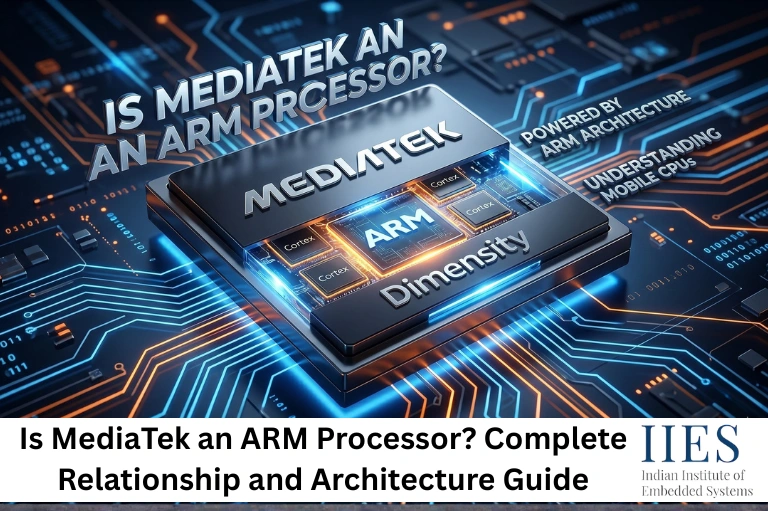
MediaTek processors are based on ARM architecture.
MediaTek licenses ARM designs and uses them as a foundation to create its own processors, adding additional technologies and optimizations.
How MediaTek Uses ARM Architecture
The relationship between MediaTek and ARM can be understood as a layered approach:
- ARM designs CPU architectures and cores
- MediaTek licenses these designs
- MediaTek integrates them into a full chipset
- Additional components and optimizations are added
This allows MediaTek to focus on innovation while leveraging ARM’s proven efficiency.
MediaTek Processor Architecture Explained
A typical MediaTek processor architecture includes the following components:
1. CPU (ARM-Based)
Uses ARM Cortex cores with a mix of:
- High-performance cores
- Power-efficient cores
This is known as big.LITTLE architecture.
2. GPU
Handles graphics rendering and gaming performance, often using ARM Mali GPUs.
3. AI Processing Unit
Dedicated hardware for AI tasks such as:
- Image enhancement
- Voice recognition
- Smart optimization
4. Connectivity
Includes integrated:
- 4G/5G modem
- Wi-Fi
- Bluetooth
5. Power Management
Optimized for low power consumption, ensuring longer battery life.
MediaTek’s Customizations Beyond ARM
While MediaTek relies on ARM for CPU architecture, it does much more than simply assembling cores. Its real value lies in how it enhances and integrates those cores into a complete solution.
1. Advanced Connectivity Integration
MediaTek has made significant progress in integrating connectivity directly into its chipsets.
- Built-in 5G modems reduce the need for external components
- Better power efficiency compared to discrete modem solutions
- Improved network stability in real-world usage
2. AI Acceleration (APU)
MediaTek includes a dedicated AI Processing Unit (APU) that works alongside the CPU.
Use cases include:
- Real-time image processing
- AI-based camera enhancements
- Voice assistants
- Smart battery management
This offloads tasks from the CPU, improving overall efficiency.
3. Multimedia and Imaging Enhancements
MediaTek focuses heavily on multimedia performance:
- Advanced image signal processors (ISP)
- Support for high-resolution cameras
- 4K and HDR video processing
- Real-time video enhancements
These features are especially important for smartphones targeting photography and content creation.
4. Power Efficiency Optimization
Beyond ARM’s efficient cores, MediaTek adds its own power management techniques:
- Dynamic workload distribution
- AI-based resource optimization
- Thermal management improvements
This ensures better battery life under different usage conditions.
5. Cost-Performance Optimization
MediaTek is known for delivering strong performance at competitive pricing:
- Efficient SoC integration reduces manufacturing cost
- Enables affordable smartphones with premium features

MediaTek vs. Other ARM-Based Processor Manufacturers
MediaTek is not the only company using ARM architecture. Several major players also build processors using ARM designs.
Key Competitors:
- Qualcomm
- Samsung
- Huawei (HiSilicon)
Comparison Overview:
Feature | MediaTek | Qualcomm | Samsung |
Focus | Value + integration | Premium + performance | Balanced ecosystem |
CPU Design | Mostly ARM standard cores | Custom + ARM cores | ARM-based |
AI Capabilities | Strong APU integration | Advanced AI engines | Integrated AI |
Pricing | Competitive | Higher | Mid to high |
Market Strength | Emerging markets | Global flagship | Mixed |
How MediaTek Differentiates:
1. Affordability
MediaTek delivers competitive performance at lower cost, making it ideal for budget and mid-range devices.
2. Integration
Highly integrated SoCs reduce complexity and improve efficiency.
3. Market Adaptation
MediaTek customizes features for specific regions, such as dual-SIM support and network optimization.
4. Feature Accessibility
Brings advanced features like 5G and AI to more affordable devices.
MediaTek vs Snapdragon in ARM-Based Processors
To better understand how MediaTek fits into the ARM ecosystem, it helps to briefly compare it with other ARM-based processor manufacturers like Snapdragon.
Both MediaTek and Snapdragon build processors using ARM architecture, but their approach differs:
- MediaTek focuses on cost-effective, integrated solutions
- Snapdragon focuses on high-end performance and optimization
While Snapdragon processors often lead in flagship performance, MediaTek has become highly competitive in mid-range and even premium segments with its Dimensity series.
Key Insight
This comparison highlights an important point:
All these processors are ARM-based, but companies like MediaTek and Snapdragon differentiate themselves through customization, optimization, and feature integration, not the core architecture itself.
Advantages of MediaTek Processors
- Cost-effective solutions
- Strong integration of features
- Efficient use of ARM architecture
- Good performance for everyday usage
- Improved AI and multimedia capabilities
Disadvantages of MediaTek Processors
- Limited custom CPU design compared to some competitors
- Software optimization may vary by device
- Past perception issues regarding heating and performance
- Gaming optimization can vary depending on the chipset
Real-World Example
When using a smartphone camera:
- ARM-based CPU handles instructions
- MediaTek APU enhances images using AI
- GPU renders visuals
- ISP processes camera input
This integration highlights how MediaTek transforms ARM architecture into a complete computing system.
Future Trends (2026 and Beyond)
The mobile processor landscape continues to evolve.
Key Developments:
- Increased focus on AI-driven processing
- Enhanced power efficiency techniques
- Integration of next-generation connectivity
- Expansion into IoT and automotive sectors
- Potential competition from alternative architectures
MediaTek is expected to continue improving performance while maintaining cost efficiency.
Best Practices for Understanding Processors
- Focus on architecture and real-world performance
- Compare chipsets within the same category
- Consider power efficiency along with speed
- Evaluate based on actual usage, not just specifications
Common Mistakes to Avoid
- Assuming MediaTek and ARM are the same
- Comparing processors without context
- Ignoring architecture differences
- Focusing only on brand rather than performance

Conclusion
So, is MediaTek an ARM processor?
The answer is clear: MediaTek is not an ARM processor, but it builds processors based on ARM architecture.
This distinction is essential for understanding how modern chipsets work. ARM provides the foundation, while MediaTek adds innovation through integration, optimization, and feature development.
By understanding this relationship, you gain deeper insight into mobile processor technology, helping you make better decisions whether you are learning, building, or buying.