What is VLSI?
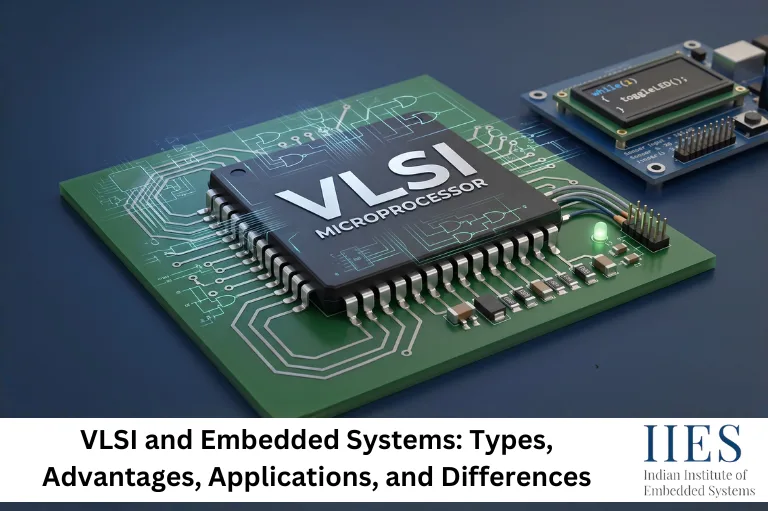
VLSI (Very Large Scale Integration) is the technology used to design and manufacture integrated circuits by placing millions or billions of transistors on a single semiconductor chip.
Instead of using multiple separate components, VLSI combines processors, memory, logic circuits, and communication interfaces into one compact IC. This improves speed, reduces power consumption, lowers manufacturing costs, and saves board space.
Today, VLSI is widely used in processors, memory chips, smartphones, communication devices, automotive electronics, and AI hardware.
Main Features of VLSI
- Integrates millions or billions of transistors on a single chip
- Reduces circuit size and power consumption
- Improves processing speed and performance
- Increases reliability by reducing external connections
- Supports high-density and complex electronic designs
An embedded system is a computer system designed to perform a specific task within a larger electronic device. It combines hardware and software to deliver reliable, efficient, and real-time operation.
Unlike general-purpose computers, embedded systems are built for dedicated applications. They are commonly found in household appliances, industrial automation, medical devices, consumer electronics, and automotive systems.
Most embedded systems use microcontrollers, microprocessors, sensors, memory, and communication interfaces to control and monitor electronic devices.
Main Features of Embedded Systems
- Designed for a specific application
- Performs real-time operations
- Low power consumption
- Compact and reliable design
- Integrates hardware and embedded software

How Are VLSI and Embedded Systems Related?
VLSI and embedded systems work together to build modern electronic products. VLSI focuses on designing and manufacturing integrated circuits, while embedded systems use these chips to perform dedicated functions.
For example, a smart washing machine uses an embedded system to control operations. The microcontroller inside the device is developed using VLSI technology, allowing the system to process inputs, control outputs, and operate efficiently.
As semiconductor technology continues to advance, VLSI enables embedded systems to become faster, smaller, more energy-efficient, and capable of supporting AI, IoT, and edge computing applications.
Types of VLSI
VLSI technology is classified based on the number of transistors integrated into a single integrated circuit. As integration levels increased, electronic devices became more compact, faster, and capable of handling complex operations.
Type | Approximate Number of Gates | Description |
SSI (Small Scale Integration) | Up to 10 | Contains basic logic gates and simple circuits. |
MSI (Medium Scale Integration) | 10–100 | Combines multiple logic functions on one chip. |
LSI (Large Scale Integration) | 100–10,000 | Integrates larger digital circuits such as memory and controllers. |
VLSI (Very Large Scale Integration) | More than 10,000 | Integrates millions or billions of transistors on a single chip. |
ULSI (Ultra Large Scale Integration) | Millions to billions | Used in modern processors, AI chips, and advanced SoCs. |
Common Applications of VLSI Types
- SSI: Basic logic circuits
- MSI: Counters, multiplexers, decoders
- LSI: Memory devices and microprocessors
- VLSI: Smartphones, laptops, automotive electronics
- ULSI: AI processors, GPUs, high-performance computing
Types of Embedded Systems
Embedded systems are categorized based on their functionality, performance, and application requirements.
Standalone Embedded Systems
These systems perform dedicated tasks independently without requiring another computer.
Examples:
- Washing machines
- Digital cameras
- Microwave ovens
- Printers
Real-Time Embedded Systems
These systems must respond within a specified time limit.
Examples:
- Airbag control systems
- Medical monitoring devices
- Industrial automation
- Flight control systems
Network Embedded Systems
These systems communicate through wired or wireless networks to exchange data.
Examples:
- Smart home devices
- IoT sensors
- Network printers
- Surveillance systems
Mobile Embedded Systems
Designed for portable electronic devices where power efficiency is important.
Examples:
- Smartphones
- Smartwatches
- Fitness trackers
- Portable medical devices
VLSI Design Flow
Designing a VLSI chip follows a structured process to ensure functionality, performance, and manufacturability.
- Specification and requirement analysis
- System architecture design
- RTL design using HDL (Verilog or VHDL)
- Functional verification
- Logic synthesis
- Physical design (Placement and Routing)
- Timing and power analysis
- Fabrication
- Testing and validation
Following this design flow helps reduce design errors and improves chip reliability before manufacturing.
Basic Architecture of an Embedded System
An embedded system combines hardware and software components to perform a dedicated function.
Main Components
- Input devices (Sensors, switches)
- Processor (Microcontroller or Microprocessor)
- Memory (RAM, ROM, Flash)
- Communication interfaces (UART, SPI, I2C, CAN, USB)
- Output devices (Display, LEDs, motors, actuators)
- Embedded software or firmware
Simple Workflow
Input → Processor → Memory → Output
The processor receives data from input devices, executes the embedded program, processes the information, and controls the output devices accordingly.
Advantages of Using VLSI in Embedded Systems
VLSI technology has transformed embedded systems by making electronic devices smaller, faster, and more efficient. By integrating millions of transistors onto a single chip, it improves performance while reducing power consumption and hardware complexity.
Key Advantages
- Compact Design: Reduces circuit size by integrating multiple components onto a single chip.
- High Performance: Enables faster data processing and efficient system operation.
- Low Power Consumption: Ideal for battery-powered and portable embedded devices.
- Cost-Effective Production: Mass manufacturing lowers the overall cost per chip.
- Improved Reliability: Fewer external connections reduce the chances of hardware failures.
- Multi-Function Integration: Combines processors, memory, and communication interfaces on one chip.
- Scalability: Supports adding new features and capabilities as system requirements evolve.
- IoT and AI Ready: Powers modern applications such as smart devices, wearable electronics, autonomous vehicles, and edge AI systems.
This concise version covers the main benefits without overwhelming the reader and fits well into a modern, SEO-friendly blog.
How Does VLSI Support Embedded Systems?
Modern embedded systems rely on VLSI technology to achieve high performance within a compact design.
VLSI enables the integration of processors, memory, communication modules, and peripheral interfaces onto a single chip. This reduces board size, lowers power consumption, improves processing speed, and increases system reliability.
Many embedded products now use System-on-Chip (SoC) technology, where multiple functional blocks are integrated into one semiconductor chip using VLSI design techniques.
Examples
- Smartphone processors
- Automotive Electronic Control Units (ECUs)
- Smart TVs
- Industrial controllers
- Medical diagnostic equipment
- IoT gateways
- Wearable devices
Advantages of VLSI
VLSI technology has transformed modern electronics by enabling highly integrated and efficient integrated circuits. It allows manufacturers to build powerful chips while reducing their physical size.
- Integrates millions or billions of transistors on a single chip
- Reduces the overall size of electronic circuits
- Delivers high processing speed
- Lowers power consumption
- Improves system reliability with fewer external connections
- Supports complex digital and analog circuit designs
- Reduces manufacturing cost in large-scale production
- Enables compact and lightweight electronic devices

Advantages of Embedded Systems
Embedded systems are designed to perform dedicated tasks efficiently. Their optimized hardware and software make them suitable for a wide range of applications.
- Performs specific tasks with high efficiency
- Offers fast response for real-time applications
- Consumes less power than general-purpose computers
- Compact and space-saving design
- Reliable for continuous operation
- Cost-effective for mass production
- Easy to integrate with sensors and communication modules
- Requires minimal maintenance in many applications
Disadvantages of VLSI
Although VLSI provides significant benefits, designing and manufacturing VLSI chips involves several challenges.
- High design and fabrication cost
- Requires advanced design tools and software
- Complex verification and testing process
- Design modifications after fabrication are difficult
- Longer development cycle for complex chips
- Needs highly skilled professionals for chip design
Disadvantages of Embedded Systems
Embedded systems are optimized for specific functions, but they also have certain limitations.
- Designed for a specific task and offers limited flexibility
- Hardware upgrades are often difficult
- Debugging can be challenging in complex systems
- Limited memory and processing resources
- Failure of a single component may affect the entire system
- Software updates may require specialized tools
Difference Between VLSI and Embedded Systems
Although VLSI and embedded systems are closely related, they serve different purposes. VLSI focuses on designing integrated circuits, while embedded systems use those circuits to perform dedicated functions.
Feature | VLSI | Embedded System |
Definition | Technology for designing and manufacturing integrated circuits | A dedicated computer system designed for a specific application |
Main Focus | Chip design and semiconductor integration | Hardware and software integration |
Purpose | Build compact, high-performance ICs | Control and automate specific tasks |
Core Components | Transistors, logic gates, IC layout | Microcontroller, processor, memory, sensors, firmware |
Programming | Verilog, VHDL, SystemVerilog | Embedded C, C++, Python (selected platforms) |
Output | Integrated circuits (ICs) | Complete electronic systems or products |
Applications | Processors, memory chips, AI chips | Consumer electronics, automotive, medical, IoT devices |
Industry | Semiconductor manufacturing | Embedded software and hardware development |
VLSI vs Embedded Systems: Which One Should You Learn?
The right choice depends on your career goals.
Choose VLSI if you are interested in:
- Digital circuit design
- Semiconductor technology
- ASIC and FPGA development
- Chip verification and physical design
- Processor architecture
Choose Embedded Systems if you are interested in:
- Microcontrollers and microprocessors
- Embedded C and C++
- IoT development
- Robotics and automation
- Firmware development
- Real-time operating systems (RTOS)
Learning both technologies provides a strong foundation for careers in electronics, automotive systems, consumer devices, industrial automation, and AI-powered embedded applications.
Applications of VLSI
VLSI technology is used to design high-performance integrated circuits that power modern electronic devices. Its ability to integrate millions of transistors on a single chip makes it essential across multiple industries.
Consumer Electronics
- Smartphones
- Laptops and desktops
- Smart TVs
- Gaming consoles
- Digital cameras
Automotive Electronics
- Engine Control Units (ECUs)
- Advanced Driver Assistance Systems (ADAS)
- Infotainment systems
- Battery Management Systems (BMS)
- Electric vehicle controllers
Communication Systems
- 5G network equipment
- Routers and switches
- Satellite communication devices
- Wireless communication chips
Medical Electronics
- ECG and ECG monitoring devices
- MRI and CT scan systems
- Portable diagnostic equipment
- Wearable health monitors
- AI accelerators
- Graphics Processing Units (GPUs)
- Machine learning processors
- High-performance server processors
Applications of Embedded Systems
Embedded systems control and automate dedicated functions in everyday electronic products. They are widely used where reliability and real-time performance are important.
Consumer Electronics
- Washing machines
- Microwave ovens
- Smart televisions
- Air conditioners
- Smart speakers
Industrial Automation
- Programmable Logic Controllers (PLCs)
- Industrial robots
- Process control systems
- CNC machines
- Factory automation equipment
Automotive Systems
- Airbag controllers
- ABS braking systems
- Cruise control
- Digital instrument clusters
- Parking assistance systems
Healthcare
- Patient monitoring systems
- Infusion pumps
- Ventilators
- Blood glucose monitors
- Digital thermometers
Internet of Things (IoT)
- Smart home devices
- Smart energy meters
- Environmental monitoring systems
- Smart agriculture solutions
- Connected security systems
Future Trends in VLSI and Embedded Systems
Both fields continue to evolve with advancements in semiconductor technology and intelligent devices.
Some important trends include:
- AI-enabled embedded systems
- Edge AI for faster local data processing
- RISC-V processor adoption
- Advanced System-on-Chip (SoC) designs
- Low-power semiconductor technologies
- Smart automotive electronics
- Industrial IoT expansion
- TinyML for resource-constrained devices
These technologies are creating new opportunities for engineers and increasing the demand for practical skills in hardware and embedded software development.

Conclusion
VLSI and embedded systems are two essential technologies behind modern electronic products. VLSI enables the design of compact and powerful integrated circuits, while embedded systems combine these chips with software to perform dedicated tasks efficiently.
From smartphones and smart appliances to medical devices, automotive electronics, and industrial automation, both technologies play a vital role in developing reliable and intelligent systems. Learning the fundamentals of VLSI and embedded systems provides a strong foundation for careers in semiconductor design, embedded software, IoT, robotics, and next-generation electronics.