
IoT Gateway vs Edge Device: Key Differences Explained As the number of connected devices continues to grow, IoT systems need efficient ways to collect, process, and transfer data. This is where IoT gateways and edge devices become important. Although the terms are sometimes used interchangeably, …
Read more
ESP32 Temperature Range: Operating Temperature, Internal Sensor & Accuracy The ESP32 temperature range is an important consideration when using the ESP32 in IoT, embedded systems, industrial monitoring, and environmental sensing applications. However, there is an important difference between the temperature range in which an ESP32 …
Read more

Internship vs Project for Freshers: Which Is Better? For freshers, one of the most common questions during job preparation is: internship vs project—which is more important? Both can help students build practical knowledge, strengthen their resumes, and improve their chances of getting hired. However, they …
Read more

Object Detection Models in Python: A Complete Guide to YOLO, Faster R-CNN, SSD and RetinaNet Object detection is one of the most important applications of computer vision. Unlike image classification, which tells us what is present in an image, object detection can identify multiple objects …
Read more

Pointers in Embedded C: Microcontroller Register Access Pointers are one of the most important concepts in Embedded C because they allow a program to work directly with memory addresses. In microcontroller-based systems, this becomes especially important because peripherals such as GPIO, UART, timers, ADCs, SPI, …
Read more
CAN vs LIN: Differences, Communication, and Automotive Applications Modern vehicles are no longer made up of mechanical systems working independently. A typical vehicle contains multiple Electronic Control Units (ECUs), sensors, actuators, switches, motors, and control modules. The engine controller needs information from other systems, the …
Read more
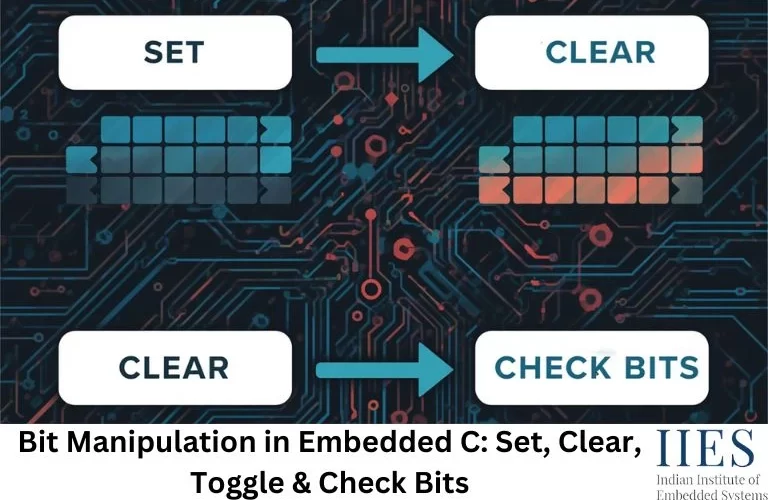
Bit Manipulation in Embedded C: Set, Clear, Toggle, and Check Bits Bit manipulation is one of the most important programming techniques used in embedded systems. Unlike application-level software, embedded programs frequently need to control individual hardware bits inside registers. A single bit may enable a …
Read more
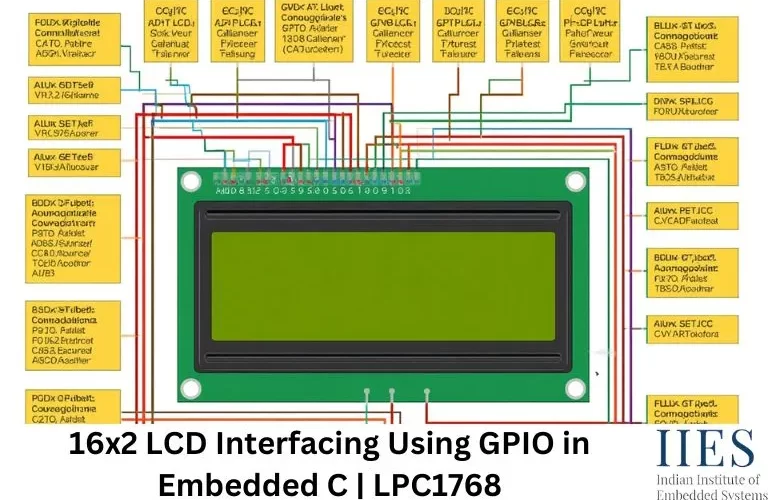
GPIO in Embedded Systems: Programming, Pins & Working GPIO in Embedded Systems is one of the first concepts developers learn when working with microcontrollers. GPIO stands for General-Purpose Input/Output, and it allows a microcontroller to interact directly with external digital hardware. A GPIO pin can …
Read more