What is an Embedded Systems Course?
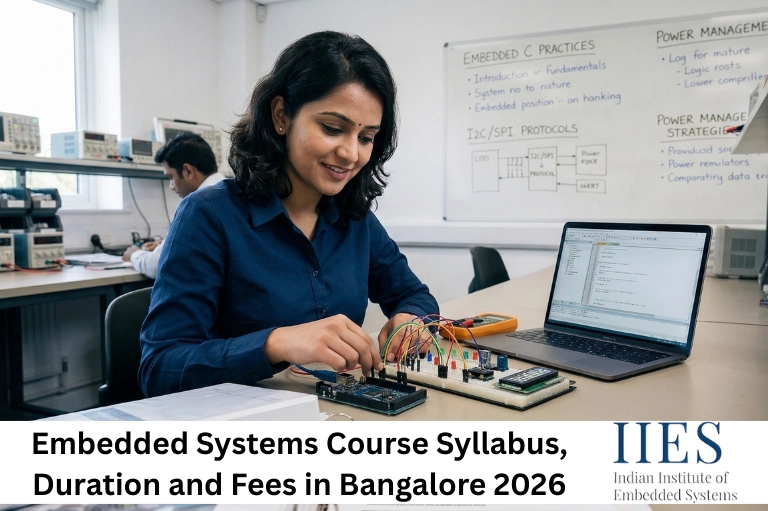
An embedded systems course is a technical training program that teaches how to design, develop, and program dedicated computing systems that operate inside larger electronic devices.
Unlike general-purpose computers, embedded systems perform specific tasks such as controlling sensors, processing signals, or running automation logic.
Examples of devices powered by embedded systems include:
- Smart TVs
- Washing machines
- Automotive ECUs
- Medical monitoring systems
- Industrial robotics
- IoT smart home devices
- Drones and autonomous machines
The course usually combines electronics, programming, microcontrollers, operating systems, and hardware debugging to help students build real-world products.
Embedded Systems Course Eligibility in India, Bangalore
Before enrolling in an embedded systems program, many students want to know whether their academic background is suitable. Since embedded systems combine electronics, programming, and hardware development, most institutes accept students from technical and engineering fields.
Typical Eligibility Criteria
Students who can enroll in an embedded systems course include:
- Electronics and Communication Engineering (ECE) students
- Electrical Engineering graduates
- Computer Science students interested in hardware programming
- Diploma holders in electronics or electrical engineering
- Working professionals interested in embedded or IoT technologies
Many training programs start with basic electronics and C programming, making it possible for beginners to gradually build their technical knowledge.

Embedded Systems Course Duration in Bangalore and India
The embedded systems course duration varies depending on the institute, learning format, and course level.
Most professional training institutes in cities like Bangalore offer 4–6 month programs that include both theoretical learning and practical project development.
Hands-on training is a key component because embedded systems development requires real hardware interaction and debugging experience.
Embedded Systems Course Syllabus
The embedded systems course syllabus usually covers hardware fundamentals, firmware programming, operating systems, and real-time applications.
Training Program | Duration |
Short-Term Embedded Training | 2 – 3 Months |
Industry-Oriented Embedded Systems Training | 4 – 6 Months |
Advanced Embedded Systems Course | 6 – 9 Months |
Online Embedded Systems Course | 2 – 6 Months |
Weekend Embedded Systems Training | 3 – 6 Months (Saturday & Sunday Classes) |
Below is a structured breakdown of a typical embedded systems training syllabus.
1. Electronics Fundamentals
Before working with embedded hardware, students must understand core electronics concepts.
Key topics include:
- Basic electrical components
- Resistors, capacitors, and inductors
- Diodes and transistors
- Digital logic fundamentals
- Number systems and binary arithmetic
- Basic circuit analysis
These topics create the foundation for working with microcontrollers and embedded hardware.
2. C Programming for Embedded Systems
Most embedded firmware is written using C programming, which makes it an essential skill.
Topics usually include:
- C syntax and program structure
- Variables and data types
- Functions and pointers
- Memory management concepts
- Bitwise operations
- Efficient coding practices for embedded devices
Students also learn how to optimize code for limited memory and real-time performance environments.
3. Microcontroller Architecture
Understanding microcontroller architecture is critical for embedded development.
Typical topics include:
- Microcontroller architecture basics
- Registers and memory organization
- Interrupt systems
- Timers and counters
- GPIO programming
- ADC and DAC interfaces
Common microcontrollers used in training include:
- ARM Cortex microcontrollers
- AVR microcontrollers
- PIC microcontrollers
4. Embedded C Programming
Embedded C focuses on programming microcontrollers directly to control hardware components.
Topics include:
- Register-level programming
- Interrupt handling techniques
- Peripheral driver development
- Memory-mapped hardware control
- Device configuration and optimization
Students also work with development environments and compilers used in real embedded development.
Tools and Hardware Used in Embedded Systems Training
Hands-on training is one of the most important parts of an embedded systems curriculum. Students gain practical experience by working with development boards, hardware interfaces, and debugging tools used in real engineering environments.
Common Tools and Hardware
Typical embedded training programs include practical work with:
- ARM Cortex microcontroller development boards
- Arduino and Raspberry Pi platforms
- Embedded sensor modules
- Embedded C compilers and development environments
- Logic analyzers and oscilloscopes for signal debugging
- JTAG and SWD debugging interfaces
Using these tools helps students understand real embedded system development workflows, including firmware testing and hardware debugging.
5. Real-Time Operating Systems (RTOS)
Modern embedded devices often require real-time performance, making RTOS knowledge essential.
Topics usually include:
- Task scheduling concepts
- Threads and multitasking
- Inter-process communication
- Mutex and semaphore synchronization
- Memory management in RTOS environments
- Real-time constraints and performance optimization
Common RTOS platforms used for learning include FreeRTOS and other lightweight embedded operating systems.
6. Device Drivers and Embedded Linux
Advanced embedded devices use Embedded Linux to run complex applications.
Typical training topics include:
- Linux architecture basics
- Embedded Linux boot process
- Device driver fundamentals
- Kernel concepts
- File systems in embedded environments
- Shell scripting for embedded devices
7. Communication Protocols
Embedded devices communicate with external modules and sensors using hardware protocols.
Important protocols include:
- UART
- SPI
- I2C
- CAN protocol (used in automotive systems)
- USB communication basics
These protocols allow embedded systems to interact with sensors, displays, and communication modules.
8. Internet of Things (IoT) Integration
Many embedded training programs include IoT development to match modern industry requirements.
Topics include:
- Sensor data acquisition
- Wireless communication modules
- MQTT protocol basics
- Cloud connectivity for devices
- IoT data monitoring systems

Embedded Systems Subjects Covered
Many students ask, what comes under embedded systems? The embedded systems subjects commonly included in professional training programs are:
These subjects together form the embedded systems curriculum required for industry roles.
Embedded Systems Course Fees in India
The embedded systems course fees vary depending on course depth, institute reputation, and lab facilities.
Average Training Cost in India
Course Level | Average Fees |
Basic embedded training | ₹25,000 – ₹35,000 |
Industry-level training | ₹35,000 – ₹55,000 |
Advanced embedded systems course | ₹55,000 – ₹80,000 |
Most professional programs fall within the ₹35,000 to ₹55,000 range, which usually includes lab access, hardware kits, and project development.
Embedded Systems Course Fees in Bangalore
Bangalore is one of India’s major technology hubs for electronics and semiconductor companies.
The embedded systems course fees in Bangalore generally range between ₹35,000 and ₹55,000, depending on course duration, hardware facilities, and instructor expertise.
Many training institutes in Bangalore provide hands-on training with real development boards and industry tools.
Embedded Systems Engineer Salary in India
The demand for embedded engineers is steadily increasing across industries such as automotive electronics, robotics, consumer electronics, and industrial automation.
Average Salary Range
Experience Level | Average Salary |
Entry-Level Engineers | ₹3 LPA – ₹5 LPA |
Mid-Level Engineers (2–4 years) | ₹6 LPA – ₹10 LPA |
Senior Embedded Engineers | ₹12 LPA – ₹20 LPA |
Technology hubs like Bangalore often offer higher salary packages because of the strong presence of semiconductor companies and electronics research centers.
Embedded Systems vs IoT vs Robotics
Students exploring embedded systems training often wonder how embedded technology compares with related domains.
Technology Comparison
Technology | Focus |
Embedded Systems | Dedicated computing systems inside electronic devices |
Internet of Things (IoT) | Network-connected smart devices that exchange data |
Robotics | Automated machines capable of sensing and performing actions |
Embedded systems act as the core computing layer for both IoT devices and robotics platforms.
Embedded Systems Learning Roadmap
For beginners entering the field, following a structured learning path helps build skills efficiently.
Typical Learning Roadmap
- Learn electronics fundamentals
- Master C programming basics
- Study microcontroller architecture
- Write firmware using Embedded C
- Interface sensors and hardware modules
- Understand RTOS concepts
- Explore Embedded Linux development
- Build IoT-enabled embedded devices
Following this roadmap allows learners to move from basic electronics knowledge to full embedded system development.
Career Opportunities After an Embedded Systems Course
After completing an embedded systems training program, students can pursue several technical roles such as:
- Embedded Systems Engineer
- Firmware Developer
- IoT Engineer
- Embedded Linux Developer
- Hardware Design Engineer
- Automotive Embedded Engineer
Industries that hire embedded engineers include automotive companies, semiconductor firms, robotics startups, medical device manufacturers, and industrial automation companies.
Future Trends in Embedded Systems (2026 and Beyond)
The embedded systems industry is evolving rapidly due to advances in intelligent hardware and edge computing.
Major trends include:
- Edge AI embedded devices
- AI-enabled microcontrollers
- Autonomous robotics systems
- Smart healthcare devices
- Industrial IoT automation
- Energy-efficient computing platforms
Engineers who understand both hardware and software integration will play a key role in the future of embedded technology.

Conclusion
Embedded systems are a critical part of modern technology, powering everything from smart home devices to advanced automotive control systems.
A structured training program helps students learn microcontroller programming, embedded C development, RTOS concepts, and hardware communication protocols, which are essential for entering the embedded industry.
In India, especially in technology hubs like Bangalore, embedded systems courses typically last 4–6 months and cost between ₹35,000 and ₹55,000, offering hands-on experience with real hardware development environments.
For students interested in electronics, IoT, robotics, or semiconductor technology, learning embedded systems can open the door to a wide range of career opportunities.
Start Your Embedded Systems Career in Bangalore
Students looking for hands-on embedded systems training in Bangalore can explore professional programs offered by Indian Institute of Embedded Systems (IIES Bangalore). The program focuses on:
- ARM microcontroller programming
- STM32 microcontroller
- Embedded C development
- RTOS concepts
- Embedded Linux training
- Real-time hardware projects
- 100% Placement Assistance
This type of practical training helps students gain industry-ready embedded development skills.