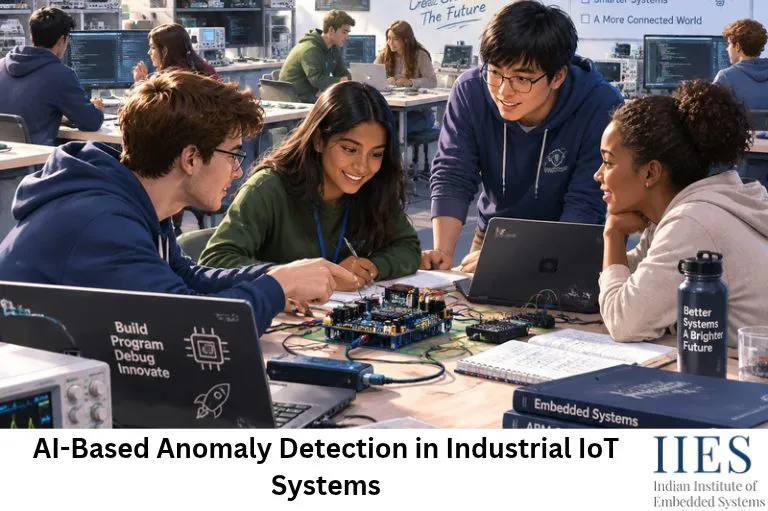
Why Should You Choose an Embedded Systems Course with Placement in 2027?
The embedded technology landscape is evolving with advancements in automotive electronics, industrial automation, robotics, IoT, semiconductor development and artificial intelligence.
These technologies require engineers who can work with both hardware and software. A well-planned Embedded Systems Course with Placement helps graduates build exactly that combination of skills.
A structured embedded systems training program should help students understand:
- C programming and Embedded C
- Data structures and problem-solving
- Electronics fundamentals
- 8051 microcontroller architecture
- ARM Cortex-M architecture
- STM32 microcontroller programming
- Embedded Linux and shell scripting
- Communication protocols such as UART, SPI, I2C and CAN
- Real-time operating systems
- IoT and embedded AI applications
- Hardware debugging and software integration
Learning these technologies through practical implementation helps students understand how embedded products work in real-world environments.
When choosing an embedded systems course for freshers, look beyond the course duration and certificate. Evaluate the practical curriculum, project exposure, trainer guidance, technical assessments and placement assistance.
You can compare these points against what the Indian Institute of Embedded Systems offers, and decide which program fits your background and goals.
What Makes an Industry-Oriented Embedded Systems Training Program Different?
Not every embedded systems course provides the same learning experience.
Some programs focus primarily on theoretical explanations, while industry-oriented training emphasizes practical implementation and technical problem-solving.
At IIES, students are encouraged to move beyond basic programming and understand how hardware and software interact.
Here are some important aspects of the training approach.
25+ Live Projects for Practical Experience
Working on projects is one of the most important parts of embedded engineering education.
At the Indian Institute of Embedded Systems, Bangalore, students get exposure to more than 25 live projects involving microcontrollers, sensors, embedded programming, hardware interfacing and real-time applications.
Project-based learning helps students understand:
- How to interface sensors with microcontrollers
- How to develop firmware for embedded devices
- How to communicate with external hardware modules
- How to troubleshoot hardware and software errors
- How to implement real-time applications
- How to integrate different embedded components
Practical experience also gives students technical examples to discuss during interviews.
500+ Coding Problems for Programming Confidence
Programming is a fundamental skill for embedded software development.
Students need to understand programming logic, memory management, pointers, arrays, structures, bitwise operations and problem-solving techniques.
At this embedded systems training institute, students work on 500+ coding problems to strengthen their programming fundamentals and prepare for technical assessments.
This practice helps them improve their ability to approach programming challenges, understand code behaviour and solve technical questions.
Training Across Hardware and Software Technologies
An embedded engineer must understand the relationship between electronic hardware and software.
The IIES embedded systems training covers important technologies such as Embedded C, microcontrollers, ARM Cortex-M, STM32, communication protocols, embedded Linux, RTOS and emerging embedded AI applications.
The objective is to help students develop a broader understanding of embedded product development rather than learning isolated programming concepts.

Placement Preparation: Beyond Technical Training
Completing an embedded systems course is only one part of career preparation.
Students must also be able to explain their projects, solve coding questions, answer technical questions and communicate their knowledge confidently.
A placement-oriented training program should include:
- Technical interview preparation: Understanding frequently asked questions related to C, Embedded C, microcontrollers, ARM architecture and electronics.
- Coding assessments: Practising programming problems and improving logical thinking.
- Project explanation: Learning how to explain project architecture, hardware components, programming logic and implementation challenges.
- Mock interviews: Experiencing technical interview situations, identifying weaknesses and improving performance.
- Placement assistance: Receiving guidance and support for relevant interview and job opportunities.
At IIES, placement preparation is an important part of the learning journey.
The institute also provides 100% Placement Assistance/Support to help eligible trained students pursue opportunities in the embedded systems industry.
IIES Placement Success: Campus Drives and Hiring Companies
Choosing an embedded systems training institute also means evaluating its industry exposure and placement ecosystem.
IIES focuses on connecting trained candidates with employment opportunities through placement activities, company interactions, technical preparation and recruitment support.
According to IIES institute-reported figures:
These figures reflect the institute’s reported placement and training ecosystem. Campus drives, hiring-company connections and actual student placements are different measures, and candidates should evaluate each separately.
Students preparing for embedded engineering roles may encounter opportunities across areas such as:
- Automotive electronics
- Embedded software development
- Firmware engineering
- Semiconductor and electronics development
- Industrial automation
- IoT and connected devices
- Hardware testing and validation
- Embedded AI applications
Companies in the broader technology and electronics industry include Tata Elxsi, L&T, LG Soft India and other engineering and product-development organizations.
The availability of specific opportunities depends on company requirements, eligibility, technical performance and recruitment schedules. Employers who want to hire trained embedded engineers can also visit the recruiters area on the IIES website.
Real Student Success Stories: From Career Challenges to Embedded Engineering Opportunities
One of the most meaningful ways to evaluate an embedded systems training institute is to understand the experiences of its students.
Here are two recent student journeys shared through Google reviews of the Indian Institute of Embedded Systems.
Student Story: Jayaraj H.P. – From Campus Placement Challenges to Amunic Systems
After completing his B.E. in Electronics and Communication Engineering, Jayaraj H.P. was unable to secure a job through campus placements.
Instead of giving up on his technical career goals, he decided to strengthen his knowledge by joining the Embedded AI course at IIES.
During his training, he focused on Embedded AI concepts, ARM Cortex architecture and programming using C, C++ and Python.
One particularly important part of his preparation was attending more than 50 mock interviews.
These sessions helped him identify his mistakes, improve his technical answers and develop confidence.
He also attended interviews with more than six companies. Although he did not clear every interview, he continued learning from each experience.
Eventually, his efforts resulted in an offer from Amunic Systems Pvt. Ltd.
In his Google review, Jayaraj highlighted the practical training, project guidance, placement support and encouragement he received from the IIES faculty and placement team.
His journey demonstrates an important lesson for engineering freshers: technical preparation, consistent practice and learning from interview experiences can make a meaningful difference.
Student Story: Pallavi H. – From a Non-IT Job to Digilux Automation
Pallavi H. had completed her college education and started working in a non-IT role.
However, her interest was always in building a technical career, particularly in Embedded Systems.
To move towards that goal, she enrolled in the PG Diploma in Embedded Systems at IIES.
Initially, strengthening her technical fundamentals and developing practical knowledge was challenging.
With guidance from her mentors, she gradually improved her understanding of embedded technologies.
During the course, she worked on several practical projects, including:
- Robotic Car using the 8051 Microcontroller
- Smart Door Lock System
- Hands-on work with LPC1768
- ESP32-based applications
These projects became particularly valuable during her technical interviews because she could explain the concepts and implementation details of the work she had completed.
After attending approximately three to four interviews, she secured an opportunity at Digilux Automation Pvt. Ltd. as part of the 2026 batch.
Her experience highlights how practical project exposure and consistent technical guidance can help graduates transition from non-IT employment into the embedded systems industry.
What These Student Journeys Teach Future Embedded Engineers
Jayaraj and Pallavi followed different career paths, but their experiences highlight several common factors:
- Strengthening programming and technical fundamentals
- Working on practical embedded systems projects
- Preparing for technical interviews
- Learning from unsuccessful interview attempts
- Building confidence through consistent practice
- Receiving guidance and placement support
Their journeys also demonstrate why students should evaluate practical training and placement preparation before selecting an embedded systems course.

How to Choose the Right Embedded Systems Course in Bangalore?
Before enrolling in an embedded systems training institute in Bangalore, consider the following factors.
Check the technical curriculum
Ensure that the course covers C programming, Embedded C, microcontrollers, ARM architecture, STM32, communication protocols and real-time technologies. A good embedded systems course with placement lists these topics clearly.
Evaluate practical project exposure
Ask how many projects students complete and whether they work with actual hardware components and development boards.
Understand the programming practice
Check whether the institute includes coding exercises, programming assessments and technical problem-solving sessions.
Evaluate interview preparation
Mock interviews, technical assessments and project explanation sessions can help students prepare for recruitment processes.
Verify placement support
Understand how the institute provides placement assistance, company interview opportunities and recruitment guidance. Ask about recent student outcomes and the companies where candidates have been placed. The IIES placements page is a good place to start for this kind of information.
Check for emerging technology training
Embedded AI and edge computing are increasingly part of industry requirements. Look for a program that includes embedded AI training alongside core embedded topics.
Speak with previous students
Student reviews and genuine placement experiences can provide valuable insights into the quality of training and support.
These factors can help ECE, EEE, E&I, CSE and other eligible engineering graduates make an informed decision.
Why Consider the Indian Institute of Embedded Systems (IIES), Bangalore?
The Indian Institute of Embedded Systems is an embedded technology training institute in Bangalore focused on developing technical skills through structured learning and practical implementation.
IIES provides embedded systems training for freshers and engineering graduates who want to build careers in firmware development, embedded software, automotive electronics, IoT and related engineering domains.
The training approach includes:
Students can explore the available training options on the IIES website and choose a program according to their educational background and career objectives.
Whether you are a recent ECE graduate, an EEE student or someone looking to transition into embedded engineering, developing practical technical skills is an important first step.
Start Your Embedded Systems Career Journey in 2027
The embedded technology industry offers opportunities across automotive electronics, semiconductor development, industrial automation, connected devices, robotics and intelligent embedded applications.
However, building a career in this field requires more than completing an engineering degree. Students need programming knowledge, hardware understanding, practical project experience and the ability to solve technical problems.
Choosing the right Embedded Systems Course with Placement can help you develop these capabilities through structured learning and practical exposure.
At the Indian Institute of Embedded Systems (IIES), Bangalore, students receive technical training, project guidance, coding practice, interview preparation and placement assistance to help them pursue their career goals.
Build Your Embedded Engineering Career with IIES!