Embedded Systems Learning Path (Beginner to Job Ready)
Following a structured embedded systems roadmap 2026 helps students develop the right technical skills step by step.
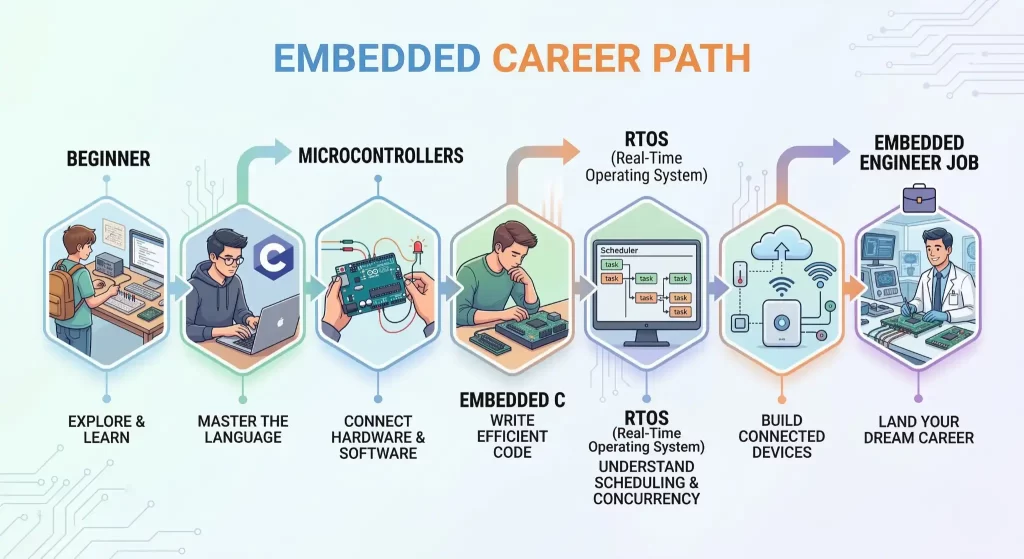
Embedded Systems Career Path – Beginner to Embedded Engineer
Stage | Skills to Learn |
Fundamentals | C Programming, Digital Electronics |
Microcontrollers | 8051, PIC, ARM, AVR |
Hardware Interfacing | Sensors, Displays, Communication Protocols |
Embedded Programming | Embedded C, RTOS |
IoT Integration | MQTT, Cloud Connectivity |
Projects | Smart Home, Robotics, Automation |
A proper embedded systems course for beginners typically covers these topics with practical labs and projects.
Best Way to Learn Embedded Systems
Many beginners ask how to learn embedded systems effectively. The best approach combines theory, hardware practice, and project building.
Recommended Learning Method
- Learn C programming and data structures
- Study microcontroller architecture
- Practice embedded C programming
- Work with development boards like Arduino or ARM
- Build embedded systems mini projects
- Learn debugging and hardware interfacing
- Prepare for embedded systems interviews
Hands-on practice is essential because companies prioritize practical experience over theoretical knowledge.

How to Become an Embedded Systems Engineer Step by Step
Students often search how to become embedded systems engineer step by step. The process usually looks like this:
Step 1 – Build Strong Programming Skills
Learn C programming, which is the primary language used in embedded development.
Step 2 – Understand Electronics Basics
Topics like digital electronics, microprocessors, and circuit design are essential.
Step 3 – Learn Microcontrollers
Focus on popular architectures like:
Step 4 – Work on Embedded Systems Mini Projects
Example beginner projects:
- Smart home automation system
- Temperature monitoring device
- IoT weather station
- Line-following robot
- RFID attendance system
Projects demonstrate practical skills to recruiters.
Step 5 – Learn Real Industry Tools
Common tools used by embedded engineers include:
- Keil IDE
- Proteus simulation
- MPLAB
- Arduino IDE
- STM32CubeIDE
Step 6 – Prepare for Interviews
Focus on embedded systems interview preparation, including:
Embedded Skills List Required for Jobs
Most embedded systems job requirements include the following technical skills:
Core Technical Skills
Communication Protocols
Additional Skills
These skills are part of most embedded systems engineer career preparation paths.
Embedded Systems Course Duration
One common question is how long does it take to learn embedded systems.
Learning Mode | Average Duration |
Short beginner course | 3 months |
Industry-oriented training | 4-6 months |
Advanced embedded systems training | 6-8 months |
Most embedded systems training with placement programs run between 4 to 6 months depending on the syllabus.
How to Choose Embedded Systems Institute
Choosing the right institute plays an important role in building practical skills.
Key Factors to Consider
- Hands-on lab training
- Industry-based syllabus
- Real-time projects
- Experienced trainers
- Placement assistance
- Hardware access
Students searching for top embedded systems institutes in India should verify the lab facilities, trainer experience, and placement record before enrolling.

Embedded Systems Training Institute in Bangalore With Lab
Bangalore is one of India’s largest electronics and semiconductor hubs, making it a great place to study embedded systems.Many students in Bangalore prefer practical training programs offered by institutes like Indian Institute of Embedded Systems, where hands-on lab practice and real industry projects help learners become job ready.
Benefits of joining an embedded systems training institute in Bangalore with lab include:
- Access to industry mentors
- Exposure to semiconductor companies
- Practical lab infrastructure
- Networking with engineers
Many institutes also offer embedded systems training in Bangalore with 100% placement assistance, helping students connect with hiring companies.
Embedded Systems Engineer Career Overview
An embedded systems engineer designs and programs small computing systems that are integrated into hardware devices.
Examples include:
- Smart home devices
- Automotive control systems
- IoT sensors
- Medical equipment
- Industrial robots
Embedded Systems Engineer Salary in India
Experience Level | Average Salary (India) |
Entry Level (0–2 years) | ₹3 LPA – ₹6 LPA |
Mid-Level (3–6 years) | ₹7 LPA – ₹12 LPA |
Senior Engineer | ₹12 LPA – ₹25+ LPA |
Major hiring companies include semiconductor firms, automotive manufacturers, IoT startups, and electronics companies.
Top Embedded Systems Companies Hiring Engineers
Some well-known companies hiring embedded engineers include:
- Intel
- Texas Instruments
- Bosch
- Qualcomm
- Samsung
- Siemens
- Wipro
- Tata Elxsi
- Continental Automotive
These companies require engineers who have strong programming knowledge, hardware understanding, and real project experience.
Entry Level Embedded Systems Jobs
Fresh graduates can apply for several roles such as:
- Embedded Software Engineer
- Firmware Developer
- IoT Engineer
- Hardware Design Engineer
- System Integration Engineer
Typical entry level embedded systems jobs require:
- Strong C programming
- Microcontroller knowledge
- Basic hardware debugging skills
- Project experience
Embedded Systems Job Opportunities in 2026
Demand for embedded engineers is increasing due to several emerging technologies.
Major Industry Growth Areas
Industry | Use of Embedded Systems |
Automotive | Autonomous vehicles, ADAS |
IoT | Smart homes, sensors |
Healthcare | Medical devices |
Aerospace | Flight control systems |
Robotics | Industrial automation |
The embedded systems engineer career is expected to grow rapidly due to expansion in IoT, AI-enabled devices, and edge computing.
Real Industry Data: Embedded Systems Market Growth
The global embedded systems market is expanding rapidly.
Year | Market Size |
2023 | $100+ Billion |
2026 | $140+ Billion (estimated) |
2030 | $180+ Billion |
Growth is driven by IoT devices, smart vehicles, automation, and AI-powered edge computing systems.
This growth directly increases embedded systems job opportunities worldwide.
Best Online Embedded Systems Courses
Students who cannot attend classroom training can still learn embedded systems online through structured digital programs and virtual labs. Many training providers now offer comprehensive online learning options that include recorded lectures, live mentoring sessions, and practical assignments.
A well-designed online embedded systems course for beginners usually includes:
- Step-by-step embedded systems learning path
- Practical embedded C programming exercises
- Microcontroller programming tutorials
- Hardware interfacing demonstrations
- Guided embedded systems mini projects
- Industry-focused embedded systems interview preparation
What a Good Online Embedded Systems Course Should Include
Before enrolling in an online program, ensure that the course provides the following components:
| Course Feature | Why It Matters |
|---|
| Structured learning modules | Helps students follow a clear embedded systems learning path from basics to advanced development |
| Hands-on lab practice | Essential for understanding hardware interfacing and microcontroller programming |
| Embedded systems mini projects | Builds a practical portfolio required for entry level embedded systems jobs |
| Industry tools training | Helps students learn tools used by professional embedded engineers |
| Mentor support | Provides guidance for debugging and solving real engineering problems |
| Embedded systems interview preparation | Prepares students for technical interviews covering C programming, RTOS, and microcontrollers |
| 100 %Placement assistance | Helps students connect with companies hiring for embedded systems engineer jobs and improves job opportunities after course completion |
Practical Learning is Still Essential
While online learning provides flexibility, embedded systems is a hardware-focused field. To become job-ready, students should combine online learning with:
This combination of theory, simulation, and hardware practice is considered the best way to learn embedded systems and prepare for real industry roles.
Many learners start with an online embedded systems course, then move to advanced training or lab-based practice to strengthen their practical engineering skills.
Future Trends in Embedded Systems
Emerging technologies are shaping the future of embedded engineering.
Key Trends
- AI-powered edge devices
- TinyML for microcontrollers
- Embedded cybersecurity
- Automotive software-defined vehicles
- Industrial IoT automation
Engineers who learn AI integration with embedded systems will have strong career advantages.
Common Mistakes Beginners Should Avoid
Many students struggle because of these mistakes:
- Learning theory without hardware practice
- Ignoring C programming fundamentals
- Not building projects
- Skipping debugging practice
- Applying for jobs without portfolio projects
Avoiding these mistakes improves your chances of securing embedded systems careers faster.

Conclusion
If you are wondering how to start a career in embedded systems, the key is following a structured learning path and gaining real project experience.
The most effective approach includes:
- Learning C programming
- Understanding microcontrollers and hardware
- Building embedded systems mini projects
- Joining an industry-oriented embedded systems course
- Preparing thoroughly for technical interviews
With the growing demand for smart devices, automation, and IoT systems, the embedded systems engineer career offers strong job stability and excellent growth opportunities.