What Is an Embedded System?
Embedded systems are specialized computing systems designed to perform specific, dedicated functions within a larger system or device. Unlike general-purpose computers, embedded systems are built for a particular task and are often hidden inside the product they control.
These systems are widely used in:
- Medical devices
- Industrial machinery
- Consumer electronics
- Automotive control units
The effectiveness of an embedded system depends on how well the software is optimized for the underlying embedded systems hardware, ensuring reliable performance in real-world environments.

Software in Embedded Systems
Definition and Role of Software in Embedded Systems
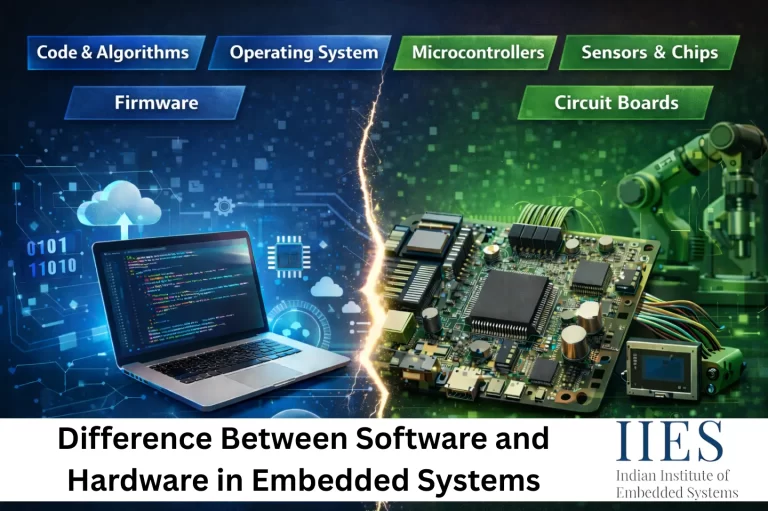
Software in embedded systems refers to the collection of programs and instructions that control how the system behaves. This software directs hardware components, manages system operations, and responds to external inputs.
In simple terms, software acts as the decision-making unit of an embedded system. In many industries, embedded software development is delivered as part of specialized software engineering services, focusing on performance, reliability, and real-time behavior.
Types of Software in Embedded Systems
Embedded software typically exists in multiple layers, each serving a specific purpose.
Firmware
Firmware is a specialized form of software stored in read-only memory (ROM). It provides low-level control of embedded systems hardware and is responsible for initializing the system during startup. Firmware ensures that essential hardware functions operate correctly before higher-level software takes control.
Application Software
Application software performs the primary function of the embedded system. This could include:
- Control logic in a washing machine
- Navigation software in a vehicle
- Monitoring algorithms in industrial equipment
This layer is often customized through embedded-focused software engineering services to meet specific product requirements.
Operating System
Some embedded systems use a lightweight operating system to manage hardware resources efficiently. These are commonly known as Real-Time Operating Systems (RTOS). RTOS ensures tasks are executed within strict time limits, which is critical for applications where timing accuracy is essential.
Hardware in Embedded Systems
Definition and Role of Hardware in Embedded Systems
Hardware refers to the physical components that make up an embedded system. Embedded systems hardware executes the instructions provided by the software and enables the system to interact with its environment.
Without reliable hardware design, even well-written software cannot perform effectively in an embedded application.
Types of Hardware in Embedded Systems
Microcontrollers
Microcontrollers are central to most embedded systems. They integrate a processor, memory, and input/output peripherals on a single chip. These components form the foundation of embedded systems hardware, offering compact, power-efficient computing solutions.
Sensors and Actuators
Sensors collect data from the environment, such as temperature, pressure, or motion. Actuators respond to software instructions by performing physical actions, such as turning a motor or opening a valve. Together, they allow embedded systems to sense and respond to real-world conditions.

Communication Interfaces
Embedded systems often need to exchange data with other devices. Communication interfaces such as UART, SPI, I2C, and Ethernet allow seamless interaction between software and embedded systems hardware.
Relationship Between Software and Hardware in Embedded Systems
Interdependence and Collaboration
Although software and hardware have separate roles, they are deeply interconnected. Software relies on embedded systems hardware to execute its instructions, while hardware depends on software to define its behavior.
This collaboration is essential in systems developed through integrated hardware design and software engineering services, where both elements must work together seamlessly.
Flexibility and Adaptability
One of the key advantages of embedded systems is their adaptability. Since software and hardware are distinct layers, developers can update software to add features or improve performance without changing the hardware. Likewise, improvements in embedded systems hardware can enhance performance while keeping the same software architecture.
Design Challenges in Embedded Systems
Trade-offs Between Software and Hardware
Designing embedded systems often involves deciding whether a function should be implemented in software or hardware. These decisions depend on factors such as:
- Cost
- Power consumption
- Processing speed
- System complexity
Striking the right balance is a core responsibility of embedded engineers and teams delivering embedded-focused software engineering services.
Power Consumption and Efficiency
Many embedded systems operate in power-constrained environments. Efficient embedded systems hardware combined with optimized software algorithms helps reduce energy consumption while maintaining performance. Achieving this balance is critical in battery-powered and industrial applications.