

Understanding Linux Internals – A Complete Beginner-Friendly Guide Understanding Linux Internals is essential for anyone who wants to work closely with operating systems, whether in software development, system administration, cybersecurity, or embedded Linux environments. Linux powers everything from smartphones and embedded devices to enterprise servers …
Read more
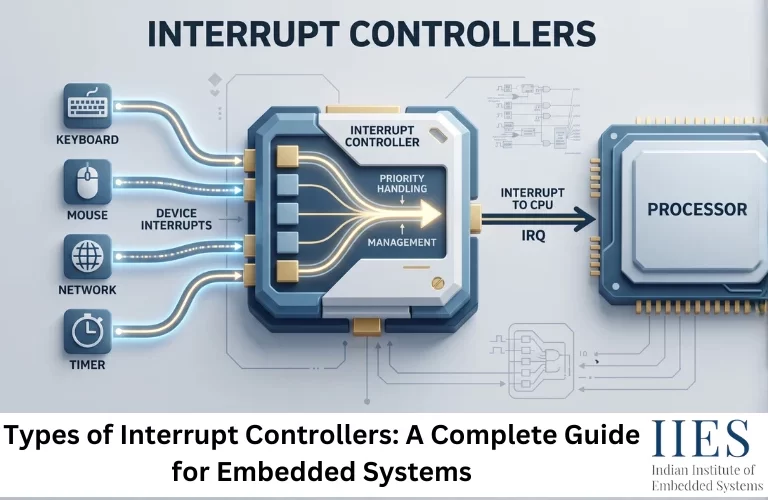
Types of Interrupt Controllers: A Complete Guide Modern embedded systems rely on interrupts to respond quickly to external and internal events without continuously polling hardware. As processors become faster and peripherals become more numerous, efficiently managing multiple interrupt requests becomes increasingly important. This is where …
Read more
C++ Templates: A Tool for Generic Programming INTRODUCTION C++ templates revolutionize the way we write reusable and efficient code. By allowing functions and classes to operate with generic data types, templates eliminate redundancy, enhance maintainability, and boost performance. Whether you’re working with data structures, algorithms, …
Read more
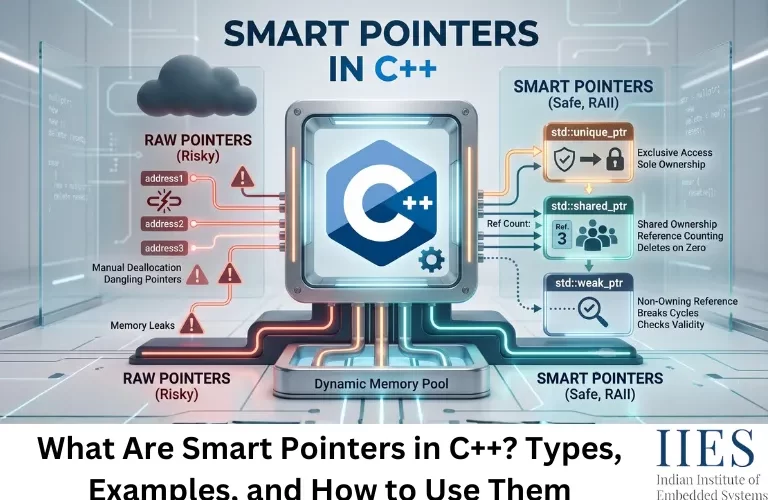
Advanced STM32 Microcontroller Debugging Methods INTRODUCTION Debugging is a crucial part of embedded system development, especially when working with STM32 microcontrollers. While basic debugging techniques like breakpoints and step execution are useful, STM32 offers advanced debugging features such as Serial Wire Output (SWO), Embedded Trace …
Read more
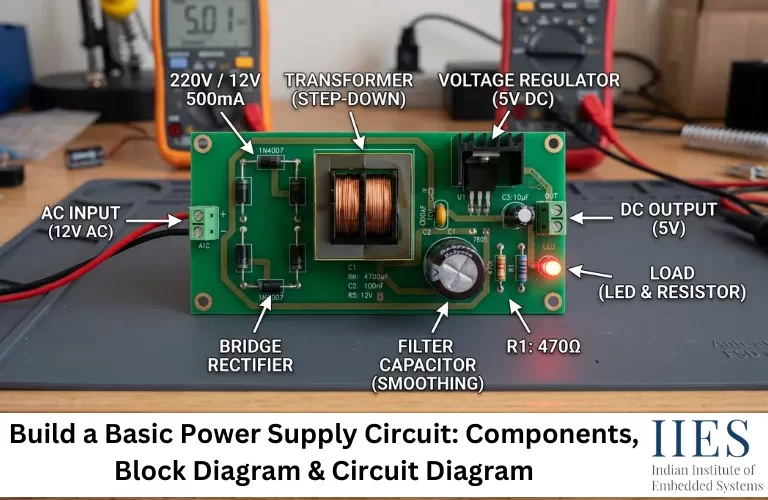
Build a Basic Power Supply Circuit: Components, Working Principle, Block Diagram & Circuit Diagram A Basic Power Supply Circuit is one of the first electronic circuits every electronics or embedded systems student should understand. Almost every embedded device, whether it is an STM32 development board, …
Read more
Object Oriented Programming in Python: OOP Concepts with Examples Object-oriented programming in Python is a style of writing code around objects that combine data (attributes) and behavior (methods). Objects are created from classes, and the four core Python OOP concepts are encapsulation, abstraction, inheritance and …
Read more
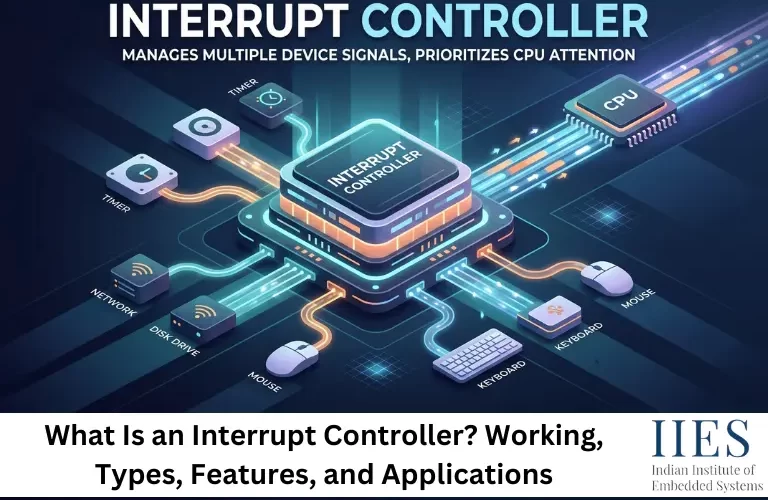
What Is an Interrupt Controller? Working, Types, Features, and Applications Modern embedded systems rarely execute only one task at a time. A microcontroller may need to read sensor data, receive UART messages, update a display, respond to button presses, and communicate over SPI or I2C, …
Read more
Explain File Handling in Python: A Step-by-Step Guide with Real-World Examples File handling in Python is the process of creating, opening, reading, writing, appending, and closing files using built-in functions. You open a file with open(), work on it with methods such as read(), readline(), …
Read more